

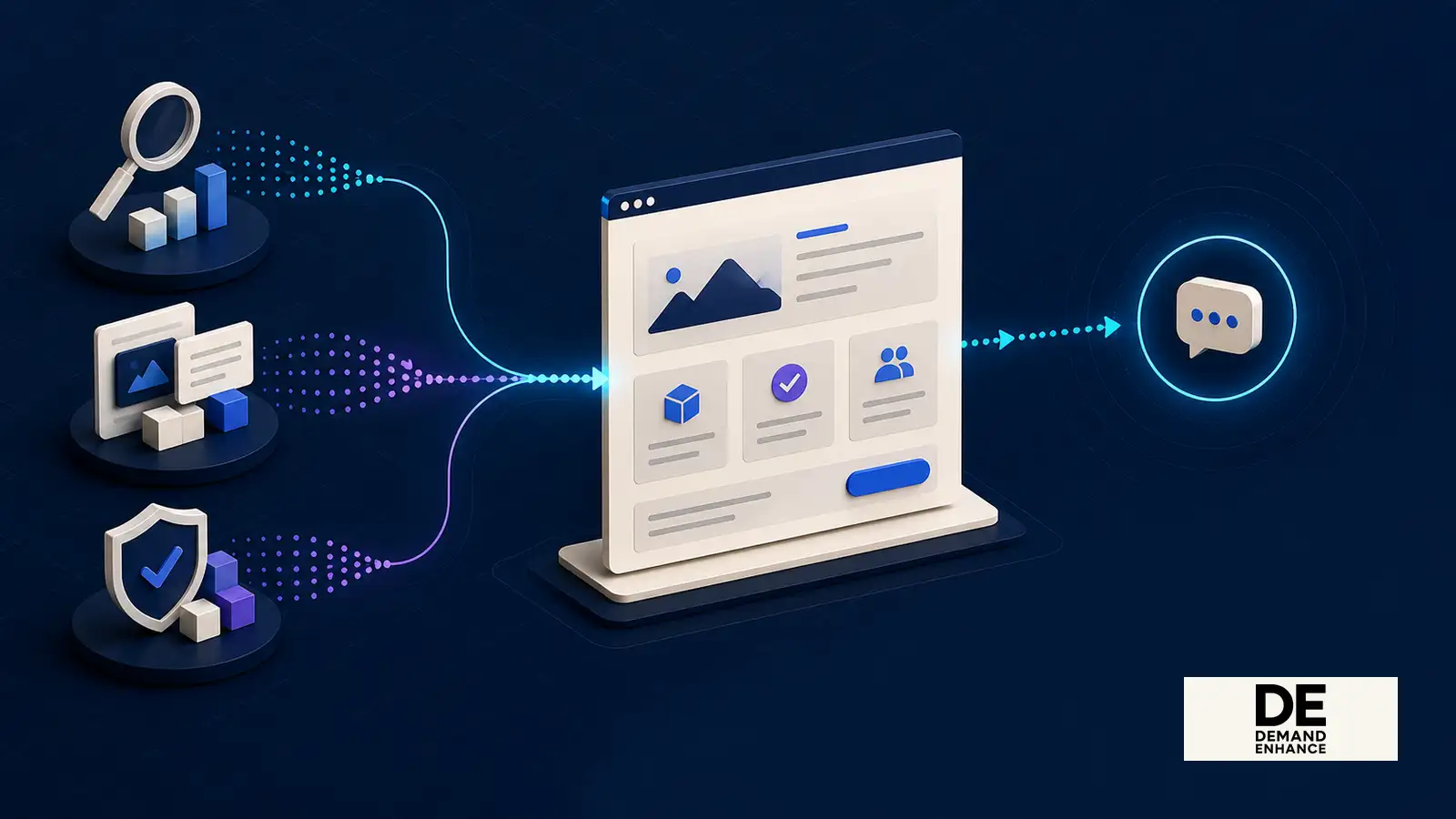
A CRO service page is not a brochure. It is the destination that your blog articles, ad campaigns, and search rankings are all pointing toward — and if it does not convert the sponsor traffic it receives, your entire content and SEO investment is wasted.
Most CRO service pages are written for search engines and agency stakeholders, not for sponsors. They are full of capability claims that no sponsor can verify, CTAs that ask for too much too soon, and structures that bury the most important evidence at the bottom.
This guide covers what every CRO service page needs to convert sponsor traffic: the structural elements, the proof requirements, the CTA strategy, and the schema that helps both Google and AI search tools understand what you offer and who it is for.
The Problem With Most CRO Service Pages
The typical CRO service page opens with a brief description of the service, lists a set of capability bullet points, includes a stock photo, and ends with a ‘Contact us’ button. This structure fails sponsors for several reasons.
First, it leads with features rather than outcomes. Sponsors do not want to know that you ‘provide Phase II clinical trial management’; they want to know that you have successfully delivered Phase II programmes in their therapeutic area, on time and within budget.
Second, it asks for commitment before providing enough evidence to justify it. ‘Contact us’ is a high-commitment action. A sponsor who has just landed on your page for the first time needs evidence before they will commit to a conversation. The typical service page provides almost none.
Third, it treats all sponsors as identical. A biotech director evaluating a Phase I partner has different questions from an established pharma company looking to add regional Phase III capacity. A service page that does not differentiate between these audiences will convert neither.
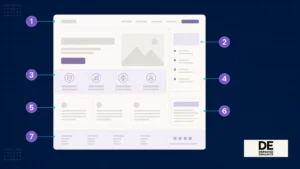
The Seven Elements of a High-Converting CRO Service Page
1. A sponsor-problem headline
Your service page headline should lead with the sponsor’s problem or goal, not your service name. ‘Phase II Clinical Trial Management’ is a service description. ‘Phase II programmes delivered on time and on budget — even in complex therapeutic areas’ is a sponsor-problem headline. The latter creates immediate relevance for a sponsor in Phase II.
2. A credibility statement in the first 100 words
Before a sponsor will read the rest of your page, they need a reason to believe you are credible. Include a specific credential in the first paragraph: the number of trials completed in this service area, a relevant regulatory approval, a therapeutic area statistic, or a named programme type you have delivered.
3. Capability organised by sponsor need, not internal taxonomy
Do not list your capabilities in the order that makes sense to your internal team. Organise them in the order that matches sponsor decision priorities. For most service areas, that means: therapeutic area relevance first, phase-specific experience second, operational model third, regulatory capability fourth.
4. At least two specific, measurable case studies
Every service page needs at least two case studies with specific, measurable outcomes. Not ‘we supported a biotech client in their Phase II programme’ but ‘we completed site activation for a 32-site Phase IIb oncology trial in 11 weeks — four weeks ahead of the sponsor’s original plan’.
If you cannot include named client case studies due to confidentiality, use anonymised versions with specific numbers. The specificity matters more than the attribution.
5. A stage-appropriate CTA hierarchy
Design your service page CTAs as a hierarchy based on commitment level. At the top or mid-page, offer a low-commitment action: download a capability overview, watch a 3-minute service explainer, or access a relevant case study. At the bottom of the page, offer a higher-commitment action: request a discovery call or submit an RFP inquiry.
This hierarchy captures sponsors at different stages of readiness and ensures you do not lose the ones who are interested but not yet ready to commit to a conversation.
6. Named team members with credentials
A service page that mentions your team only in the abstract — ‘our experienced team of clinical professionals’ — builds almost no trust. A service page that names the therapeutic area lead, includes their credential and publication history, and links to their full bio builds significant trust with the scientific and regulatory buyers who evaluate CROs.
7. Schema markup
Apply Service schema to every service page, with the service type, provider (your organisation), area served, and a description that includes your key differentiators. Apply Organization schema at the site level. Use BreadcrumbList schema to help both Google and AI search tools understand where each service page sits in your site structure.
Sponsor-Type Differentiation on Service Pages
If your service page is targeted at multiple sponsor types — startup biotechs, mid-size pharma, and large established sponsors — it needs to acknowledge those differences or it will resonate with none of them.
One approach is to include a brief ‘This service is a good fit if…’ section that names the sponsor profiles you work best with. This does not exclude other sponsors; it creates immediate relevance for the ones you are targeting and demonstrates that you understand the differences between sponsor needs.
Another approach is to create separate service page variants for your primary sponsor profiles — one for first-time outsourcing biotechs, one for established sponsors looking for regional capacity. This takes more resource but produces significantly better conversion rates.
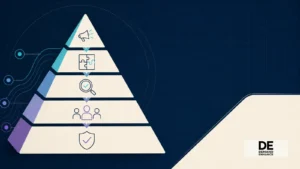
The Sponsor Proof Hierarchy
Not all proof is equal on a CRO service page. Here is the hierarchy from most to least persuasive for a technical sponsor buyer.
- Audited regulatory outcomes: FDA/EMA inspection results, NDA/BLA submissions supported, IND-enabling studies completed
- Specific quantified case study outcomes: timeline, budget, site count, approval result
- Named therapeutic area programmes: ‘We have delivered 47 Phase II oncology trials in the past five years’
- Industry certifications and accreditations: ISO, GCP compliance audits, ICH guidelines compliance
- Client testimonials with title and company type
- Team credentials and publication records
- General capability descriptions: ‘Our team brings deep therapeutic area expertise’
Most CRO service pages are built primarily on items 4–7. The highest-converting pages lead with items 1–3.
Internal Linking From Service Pages
Every service page should link to at least three other pieces of content: a relevant blog article in your sponsor journey cluster, a related service page (ideally an adjacent phase or indication), and a case study or proof asset page. This creates a conversion ecosystem rather than a dead-end service page.
Service pages should also be linked from multiple blog articles. If you have a Phase II oncology service page and you have published three blog articles on oncology trial challenges, each of those articles should link directly to the service page. This is both good SEO and good conversion architecture.
What to Fix First: A Service Page Audit Priority List
- Replace generic headlines with sponsor-problem headlines
- Add a specific credibility statement in the first 100 words
- Replace capability bullet points with outcome-led evidence
- Add at least two specific case studies with measurable outcomes
- Rebuild your CTA structure as a commitment hierarchy
- Add named team members with credentials to each service page
- Implement Service schema and verify it in Google Search Console
Next Steps
A well-structured CRO service page is the highest-ROI asset you can invest in improving. If your blog and SEO programme are driving sponsor traffic and that traffic is not converting, the service page is almost certainly the problem.
Request a CRO service page audit from DemandEnhance. We will review your top service pages against the seven-element framework and provide a prioritised action list that you can implement without a full redesign.