
REPUTATION / AUTHORITY / DIGITAL PR
Reputation Management for Biotech, Pharma and CROs
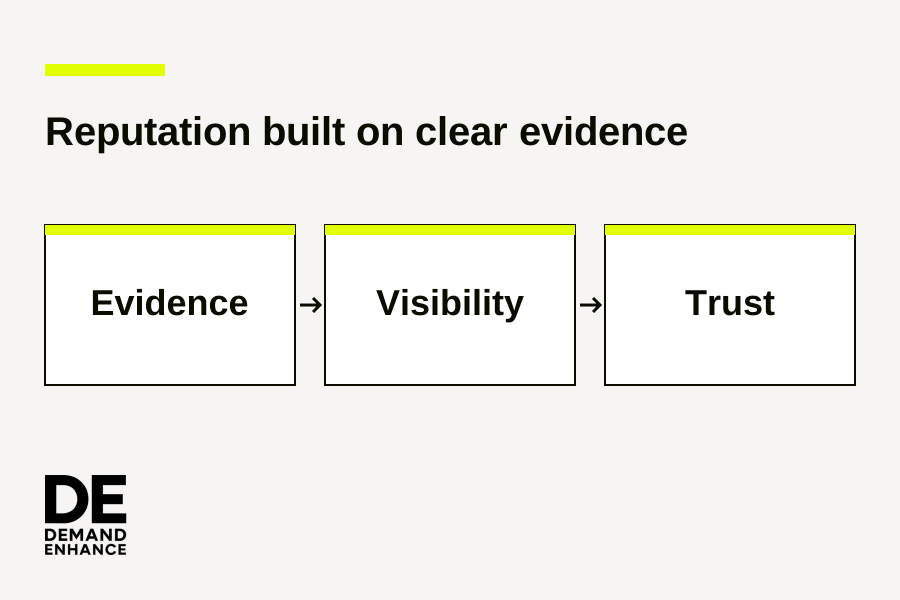
Make your company's expertise easier for specialist buyers to assess. Connect branded-search monitoring, credible expert voices and relevant third-party sources into a focused authority program.
For biotechnology and pharmaceutical companies, contract research organizations (CROs), contract development and manufacturing organizations (CDMOs), and adjacent life sciences businesses with technical offers and considered B2B buying journeys.
01 / BASELINE
See what buyers encounter
Review branded search results, company facts, expert profiles, earned mentions and agreed AI-answer samples across priority markets.
02 / EVIDENCE
Make real expertise easier to assess
Turn approved capability information and subject-matter input into useful profiles, authored perspectives and source-backed assets.
03 / PRESENCE
Earn relevant independent visibility
Pursue editorial and industry opportunities where the insight, contributor and audience genuinely fit.
Authority for technical offers and high-consideration markets
Life-sciences buyers assess more than a website. They may check company capabilities, leadership, specialist expertise and independent sources while comparing a potential partner. This service helps your team make that evidence easier to find and keep its public account accurate.

Biotech and pharma leadership teams
Clarify how company facts, platform or service descriptions and executive visibility appear across owned and independent sources. Prioritize evidence that supports the business's actual partnership and commercial goals.
CRO and CDMO commercial teams
Help sponsor-facing experts explain relevant service capabilities and experience in language technical buyers can evaluate. Keep each contribution grounded in approved information and its original context.
Marketing and communications leads
Build a repeatable view of branded search, expert presence, media coverage and sampled AI representation. Give internal reviewers a practical route for checking claims and escalating factual issues.
What reputation and authority management can include
The work starts with a defined set of company facts, markets, names and questions. From there, monitoring and authority activity can be prioritized around the sources that matter to your buyers.

Branded SERPs and reputation monitoring
Establish an agreed baseline for branded and service-related searches in priority markets. Review the visible result mix, company profiles, key mentions and material inconsistencies. Record outdated or inaccurate information, relevant negative-result risks and the source owner or platform that controls any correction route. Monitoring identifies issues; it does not guarantee a clean result page or change a publisher's editorial decision.
Executive and subject-matter-expert visibility
Develop useful profiles and thought leadership with real company leaders and subject-matter experts. Shape interviews, authored perspectives, explainers or technical assets around the questions those contributors can credibly address. Your team supplies the approved facts and qualified reviewers; we help structure and distribute the material without inventing credentials or presenting Demand Enhance as a scientific, clinical or regulatory authority.
Digital PR and trusted third-party sources
Identify relevant industry publications, professional communities and editorial opportunities where a verifiable contribution may help buyers understand your work. Develop story angles and useful assets from substantiated company information. Track actual coverage, source relevance, links and referral context when earned. Editorial acceptance, link inclusion and publication timing remain at each third party's discretion; the work does not promise placements or links.
AI representation, escalation and correction routes
Sample agreed buyer questions across selected AI discovery environments and record whether your brand appears, which sources are cited and whether capability descriptions are accurate. Treat findings as directional snapshots because answers and citations can change. When a factual error or outdated listing is found, prepare an evidence-based correction request for the source owner or platform. Accurate negative reporting is not a removal target; any removal depends on the publisher or a platform's own eligibility rules.
A clear process for building and protecting credibility
Define the public facts and decision-makers first. Then agree what to monitor, where a credible contribution can help and who approves each technical statement.
01 / Define the record
Agree the company, service lines, leaders, experts, markets and branded queries in scope. Collect approved source material and identify claims that need scientific, medical, legal, regulatory or communications review by your team.
02 / Review visible evidence
Assess branded results, selected profiles and third-party sources, then sample AI answers against an agreed query set where tools and access permit. Note gaps, inconsistencies, risks and evidence limitations.
03 / Prioritize useful contributions
Choose expert content, profile improvements, correction requests or editorial approaches based on buyer relevance and available evidence. Confirm contributors, approvals, target sources and the intended next step before outreach.
04 / Monitor and refine
Record changes in coverage, source quality, branded-result accuracy and sampled AI representation. Review referrals or qualified actions only where tracking supports them, then update priorities as the market and company evidence change.
Measure the quality and accuracy of your public presence
Authority work should report what appeared, where it appeared and whether it helped buyers take a useful next step. A mention, link or AI citation is an observation, not proof of commercial impact by itself.
Relevant earned presence
Report confirmed coverage, contributor and publication context, source relevance, link inclusion where present, and referral activity when measurable. Separate secured publication from outreach activity and pending opportunities.
Branded-result and fact accuracy
Track agreed searches and profiles for factual consistency, useful company information, visible expert sources and changes in the result mix. Keep location, date and query context with each observation.
Sampled AI representation
Compare agreed prompts over time for brand mentions, cited sources and material inaccuracies. Report the sample and environment so directional observations are not mistaken for market-wide share of voice.
Search, editorial and AI platforms control their own results. No reported indicator guarantees reputation improvement, link acquisition, removal, citation or qualified demand. Pipeline contribution requires agreed qualification rules and reliable CRM or analytics data.
Connected to search foundations and AI monitoring
Reputation Management focuses on earned third-party presence, expert visibility and the accuracy of a company's public record. SEO & AI Search Marketing supports accessible, useful site evidence; AI Search Marketing adds ongoing query, citation-source and answer-representation analysis. These services share content and authority inputs, while each answers a different commercial question.
Resources on expertise and evidence
These Demand Enhance articles explain how real expertise and clear technical content can support buyer evaluation.
Demonstrate life-sciences expertise with evidence
Practical guidance on real authorship, useful sources and experience signals, without treating academic publication as the only way to show expertise.
Structure technical content for search and AI discovery
See how clear information architecture and supported expertise help search systems and professional readers understand a life-sciences company's subject matter.
Questions about life-sciences reputation and authority
A credible program distinguishes earned visibility and factual correction from outcomes controlled by publishers, search engines and AI platforms.
How should a biotech company choose a life-sciences PR partner?
Assess sector fit, relevant published work, real expert contributors and a clear approval process. Ask what the engagement will deliver, which sources are relevant to your buyers and how confirmed coverage will be distinguished from outreach. Technical claims need your authorized reviewers. A useful partner should explain editorial limits and measurement; media placement, backlinks, removal of accurate reporting and qualified demand cannot be guaranteed.
How is reputation management different from digital PR?
Reputation management establishes what buyers can find and whether important company information is accurate across branded results, profiles, mentions and sampled AI answers. Digital PR pursues relevant independent coverage and expert visibility. They can support each other, but monitoring and correction routes should not be reported as earned coverage.
Can you remove an accurate negative search result?
No service can promise removal of accurate reporting or editorial content. A publisher or platform decides whether a correction or removal request meets its standards and applicable rules. We can document the source, assess whether a factual correction route exists and improve the availability of accurate company information, while preserving the distinction between an issue and an outcome we control.
Can you guarantee media coverage, backlinks or AI citations?
No. We can research relevant sources, prepare substantiated material and make a focused case to editors or other publishers. They decide whether to publish, include a link or cite a source. AI answers and citations can vary by platform, query and time, so reporting describes observed samples rather than promising placement or reach.
How do you monitor a biotech brand's representation in AI search?
Agree a set of branded and buyer questions, markets and available AI environments, then record whether the company appears, which sources are referenced and whether the description matches approved facts. Repeat samples can reveal patterns and possible source gaps. They remain directional snapshots, not a complete measure of every answer or buyer's experience.
Who approves scientific and regulated claims in thought leadership?
Your authorized subject-matter and internal reviewers supply or validate technical information and approve claims that require scientific, medical, legal or regulatory review. We can organize the editorial workflow and make the approved evidence clear. The service does not certify compliance, provide medical advice or replace your company's review responsibilities.
Make your public evidence easier to trust and evaluate
Bring the company facts, expert voices and buyer questions that matter most. We can discuss a focused plan for branded-result monitoring, thought leadership, relevant digital PR and accurate representation across search and selected AI environments.
Book a strategy callA useful starting point is the market you serve, the sources buyers consult and the public information your team wants to review. This site is protected by reCAPTCHA and the Google Privacy Policy and Terms of Service apply.