
In life science marketing, compiling a list of technical topics that competitors publish can feel like immediate progress. Once a team pulls a spreadsheet of URLs from an adjacent contract research organization (CRO) or contract development and manufacturing organization (CDMO), the initial reaction is often to match every missing page.
How to Use Competitor Content Gaps to Build a Life Science SEO Roadmap
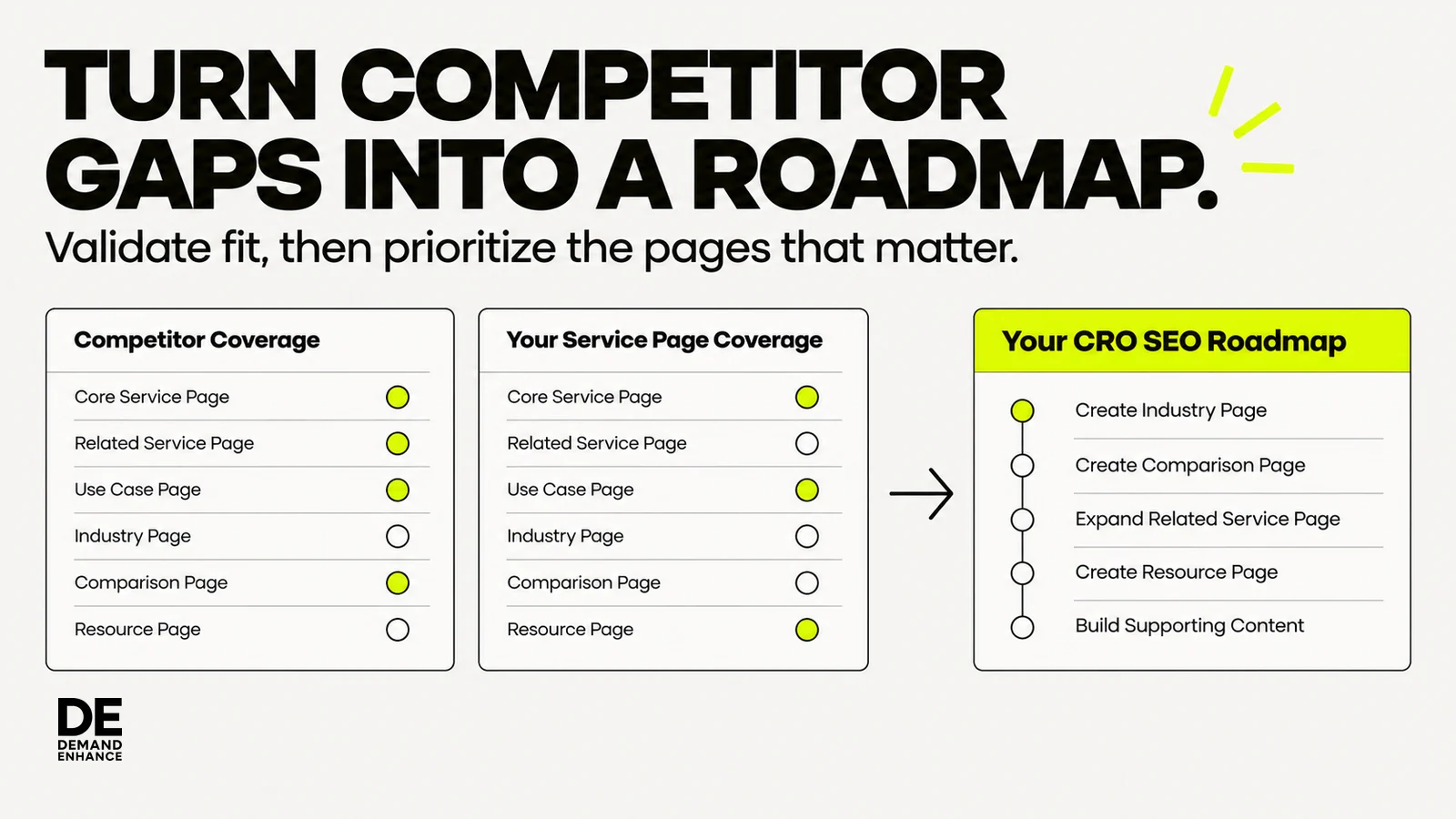
Treating another organization’s site architecture as an editorial blueprint creates problems. Trying to fill every external gap pushes teams to publish thin summaries, choose mismatched page formats, or cover subjects that fall outside their verified service capabilities.
To turn competitor observations into an evidence-led roadmap, marketing teams need a disciplined validation process. Rather than assuming that every unaddressed search term warrants a new page, a team should treat an observed gap as a preliminary hypothesis. Validating these hypotheses helps prevent wasted writing time and ensures that published content reflects real service capabilities and buyer needs.
What a Competitor Content Gap Is—and Is Not
A useful content gap occurs when a prospective buyer looks for information about a technical service or capability, your site lacks verified information to guide them, and another provider addresses that question. Clarifying that definition helps teams avoid reactive publishing.
A missing keyword is a hypothesis, not a publishing brief
Finding a technical term that a competitor covers does not mean you should write about it. A missing keyword observed in third-party research indicates potential audience interest, not confirmed commercial fit.
Focusing only on keyword lists hides buyer intent. Before assigning editorial hours to a missing phrase, treat the discovery as a hypothesis to test. Using a structured Keyword Research Strategy for CRO and Biotech Companies provides an upstream filter. Vetting terms early prevents irrelevant or low-value topics from entering the content pipeline.
Separate direct competitors from adjacent information sources
Life science search results often feature academic journals, regulatory portals, clinical trial registries, and university glossaries. When a program director searches for an assay mechanism or molecular pathway, finding an academic paper or government summary does not signal a commercial competitor gap.
Competitor analysis should focus on organizations that offer comparable services and compete for the same project budgets. Distinguish between general reference libraries that define biological terms and commercial providers that offer specific development, analytical, or manufacturing services.
Gather Comparable Evidence
Before deciding what to write, review how competitors handle the topic. As Marzipan’s life-science SEO guide points out, reviewing competitor keyword coverage and page formats for technical queries provides an initial baseline for evaluation. Focus on observable elements on their live pages.
Confirm the service, audience, and query scope
Start by defining the scope of the competitor’s page. Does the page address discovery-phase researchers, or is it aimed at late-phase development leads and procurement managers? An observed gap matters only if it connects to an audience your organization is equipped to support. Defining this scope prevents teams from pursuing topics outside their commercial focus.
Compare page purpose, depth, format, evidence, and next step
Published content does not always satisfy the visitor’s intent. Examine the competitor’s approach carefully:
- Page purpose: Does the page explain a specific laboratory workflow, or does it offer only a high-level summary?
- Depth and detail: Does the page provide concrete parameters, acceptance criteria, or equipment limits, or does it stay vague?
- Format: Is the content structured as a service overview, a technical explainer, a protocol summary, or an application note?
- Evidence: What data, references, or quality standards support the text?
- Next step: Does the page offer a logical path to a relevant capability page or contact form, or does it leave the visitor without clear direction?
If a competitor provides a confusing path or thin technical detail, competing successfully may require clarifying the evaluation path on your own site rather than matching their word count.
Record what you could not verify
Competitive analysis rarely gives complete visibility. When reviewing competitor pages, note what remains unverified. If an organization mentions fast turnaround times or high batch yields without explaining testing conditions, batch sizes, or qualification steps, document those omissions. Noting unverified claims helps your subject-matter experts identify where your team can provide clearer, substantiated technical information.
Validate Candidate Gaps Against Your Own Business
Applying Agentic SEO to gap analysis may help teams compare competitor topic coverage with internal laboratory capabilities. In a scoped pilot after a competitive audit, candidate gaps can be organized for review; scientific directors should verify service fit and technical accuracy before deciding what to publish.
An observed gap becomes a viable candidate for your roadmap only after internal review. Test each proposed topic directly against your company’s actual operations and subject-matter expertise.
Competitor gap validation checklist
- Confirm the observed page belongs to a comparable commercial provider rather than a journal, registry, or general reference source.
- Check service fit, audience intent, existing site coverage, and internal questions before turning an observed keyword into an editorial assignment.
- Record unverifiable competitor statements separately and ask internal experts whether your organization can supply a more useful, supported answer.
Put the idea into practice
Decide whether a gap merits a page
A competitor covers a technical method your team does not currently publish about. What should the content lead do next?
Validate service fit first
Choose this when internal ownership or capability is uncertain. Ask whether the organization performs the method, can substantiate its scope, and serves the audience behind the query; defer the topic if those checks remain unresolved.
Improve related coverage
Choose this when the method is already part of a verified service but lacks explanation. Add useful detail to the existing page if it serves the same intent, then link to evidence the organization is allowed to share.
Move from observation to roadmap
Review the competitor page
Record its audience, purpose, format, visible evidence, and next step. Separate observable page features from claims about performance or capabilities that the public page does not prove.
Check internal fit
Compare the topic with actual services, existing pages, buyer questions, expert availability, and approved evidence. Drop topics that require capabilities the organization cannot substantiate with available records.
Set the roadmap action
Choose build, improve, consolidate, or defer and document ownership, review needs, and intended purpose. Revisit the decision when service scope, evidence, or expertise changes and state the reasoning.
Select a step to explore the idea.
Check service fit and technical accuracy
Confirm that the candidate topic aligns with verified internal capabilities. Marketing teams should ask specific diagnostic questions:
- Do our teams actively support this method, assay, or process step?
- Can our technical staff substantiate the required parameters and quality controls?
- Does our service scope match the regulatory and documentation needs of the searching audience?
If internal answers are negative or uncertain, drop the candidate topic regardless of third-party search demand estimates. Publishing content for services you cannot deliver damages credibility with technical evaluators.
Compare the gap with existing pages and internal questions
Creating a new URL is counterproductive if the topic fits naturally on an existing page. Review whether the competitor’s page represents an entirely new subject or a deeper detail that belongs on an established service page.
Cross-reference the candidate topic with questions received by business development, customer support, and project management teams. If prospective clients frequently ask about a specific technical constraint, adding that detail to an existing service page can be more effective than creating a standalone post.
Ask an expert what answer would be genuinely useful
Search engines index words, but technical buyers evaluate accuracy and substance. Review candidate topics with internal subject-matter experts and ask what practical information an evaluator needs.
If a competitor published a broad overview that skips practical variables, ask your technical lead what parameters determine success in that workflow. If your team lacks the expertise to provide meaningful technical depth, leave the topic off the roadmap. Useful life-science content depends on accurate, verifiable details that your organization can support.
Prioritize Work with a Transparent Decision Matrix
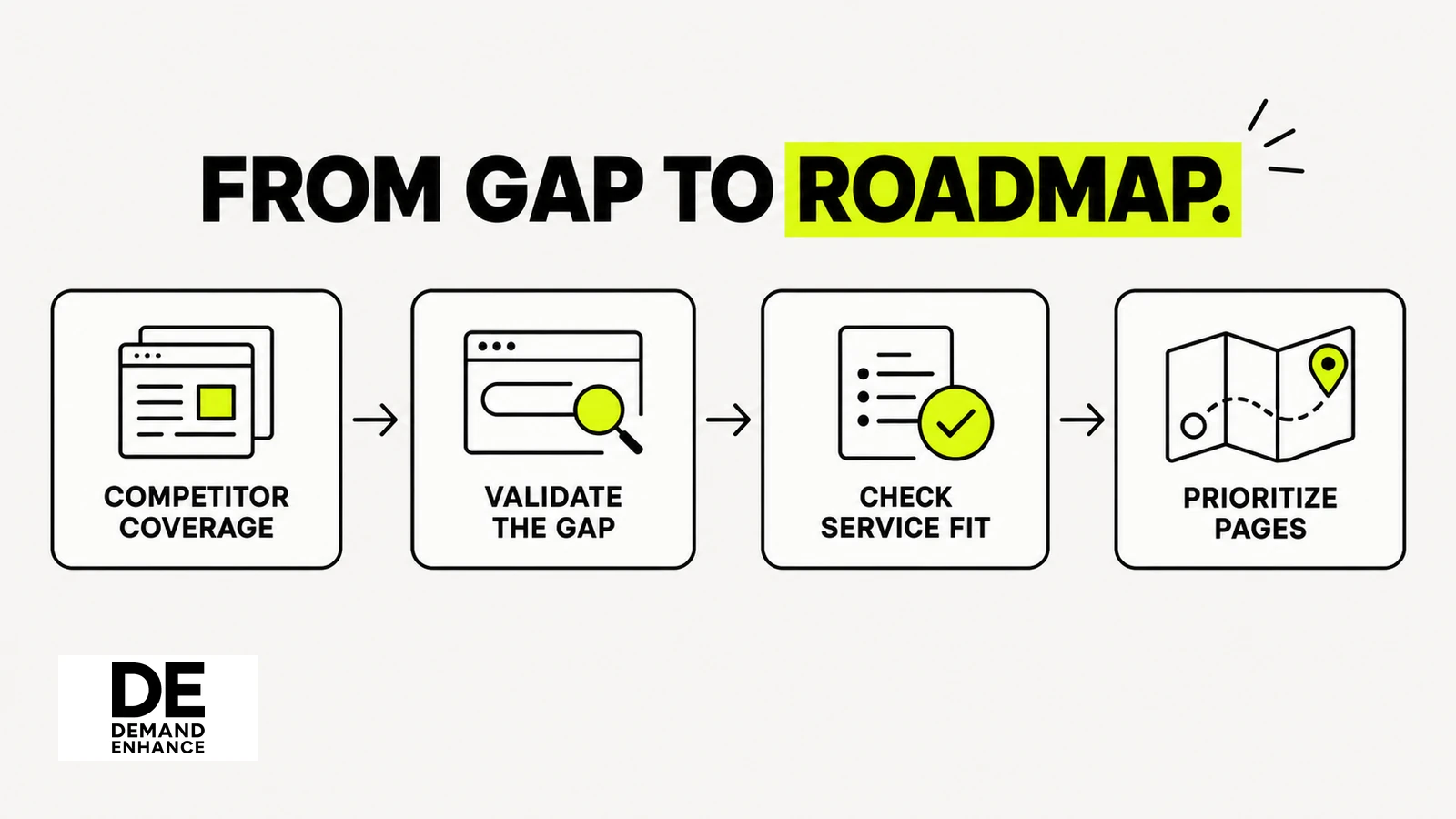
Topics that pass internal validation must be organized for production. Producing articles without clear prioritization creates inconsistent publishing schedules and strains technical reviewers. Use a transparent qualitative decision aid to evaluate and sequence candidate pages.
Relevance, intent, evidence confidence, effort, and upkeep
Evaluate each approved topic using five practical criteria:
- Strategic relevance: How closely does this topic support current service lines and commercial priorities?
- Buyer intent: Is the searcher looking for broad background theory or evaluating a specific technical solution? Focus first on problem-solving queries, using the principles in Clinical Trial Vendor SEO: How to Rank for Problems Sponsors Actually Search For to address specific buyer challenges.
- Evidence confidence: Do we have the validated data, case examples, or expert input needed to provide an authoritative answer?
- Production effort: Does the topic require original diagrams and multiple technical reviews, or can an existing draft be expanded quickly?
- Upkeep requirements: Will this content remain accurate for several years, or will upcoming regulatory updates or method changes require frequent revisions?
Build, improve, consolidate, or defer
Use these criteria to assign one of four actions to each topic:
- Build: Create a new page when a distinct buyer intent is entirely unaddressed on your site and your team has the verified evidence to support it.
- Improve: Update an existing page that covers the topic superficially, adding missing parameters, clearer evidence, or better navigation.
- Consolidate: Merge thin, overlapping posts into a single, comprehensive resource that answers related questions in one place.
- Defer: Postpone topics that have theoretical value but lack available subject-matter experts or internal supporting data.
Turn Decisions into a Roadmap
Once topics are evaluated and assigned an action, organize them into a production schedule. A roadmap translates analytical decisions into an orderly workflow for drafting, technical review, and publication.
Sequence foundational pages and supporting assets
Publish foundational service and capability pages before creating supporting educational articles. A logical sequence ensures that when an explanatory post goes live, it can link directly to an existing service page where the reader can learn about specific capabilities.
This production sequencing differs from site architecture planning. As outlined in How to Build a CRO SEO Content Hub That Attracts Sponsors, Not Just Traffic, content hub structure governs how visitors browse your website, while the roadmap governs the timeline for researching, writing, and reviewing individual pages.
Assign owners, evidence, review dates, and success measures
A roadmap stays on track when responsibilities are documented clearly. For every approved page, record:
- Editorial owner: The writer responsible for producing the draft.
- Technical reviewer: The subject-matter expert responsible for confirming scientific accuracy.
- Source evidence: The internal protocols, data sets, or published standards that substantiate the text.
- Review schedule: Achievable deadlines for draft delivery, expert feedback, and final sign-off.
- Intended outcome: A clear definition of page success, whether that means ranking for a specific technical query or giving sales teams a clear reference document for prospective clients.
Revisit the Roadmap as Capabilities and Evidence Change
A life-science SEO roadmap should be updated regularly. Competitors introduce new services, alter site navigation, and update their publications. Internally, your organization will validate new methods, expand facility capacity, and adjust commercial goals.
Schedule periodic reviews to align the roadmap with your organization’s current operations. A topic identified six months ago may lose priority if business focus shifts away from that service. Conversely, a topic previously marked for deferral may move into production once new data or expert availability allows your team to write with confidence.
Using competitor gap analysis does not mean copying another company’s editorial calendar. By evaluating external signals, verifying claims against internal capabilities, and using a structured prioritization matrix, marketing teams can publish content that genuinely serves technical buyers.
To plan an evidence-led content strategy tailored to your technical capabilities, contact Demand Enhance.
Frequently asked questions
How do you decide whether a competitor content gap matters?
Treat the observation as a hypothesis. Check whether the query serves an audience the company supports, whether the topic matches a verified capability, and whether internal experts can provide useful evidence before assigning editorial work.
What should a competitor review record beyond keywords?
Record the page's audience, purpose, format, depth, visible evidence, and next step, along with anything you could not verify. This makes the review useful for evaluating buyer questions without treating another company's claims as established facts.
When should a gap lead to an update instead of a new page?
Update an existing page when it already serves the same intent but lacks relevant detail, evidence, or navigation. Create a new page only when the audience need and answer are distinct and the organization can support the content.
Sources and further reading
Demand Enhance
Validate competitor observations before publishing
Discuss an evidence-led content roadmap based on competitor observations and your verified capabilities with Demand Enhance. Bring a shortlist of candidate topics and the internal evidence available for review.
Discuss your priorities