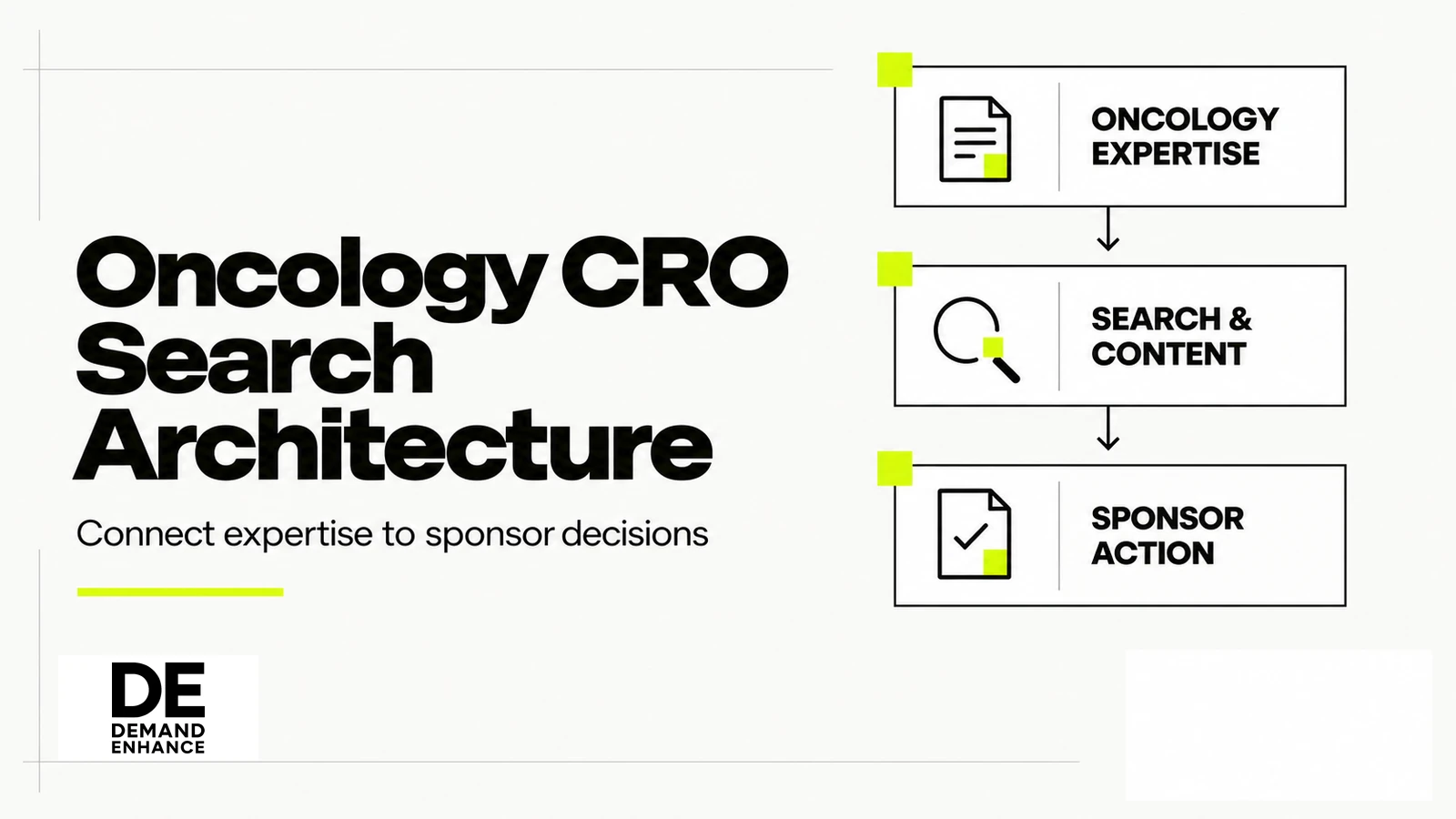
Oncology is the largest and most competitive therapeutic area in clinical drug development. It is also one of the most valuable for CROs that can credibly serve it. A single oncology programme — especially a Phase II or III oncology trial with complex protocol requirements, multiple sites, and a long follow-up period — can represent a multi-year, multi-million dollar engagement.
For oncology CROs, the SEO opportunity is significant but poorly exploited. Most oncology CRO SEO is built around generic clinical trial terms or high-level oncology terms that attract a broad, mostly non-sponsor audience. The sponsors who actually commission oncology trials — biotech directors, clinical development VPs, CMOs at oncology-focused companies — are searching for something far more specific.
This guide explains how to build an SEO strategy for an oncology CRO that targets sponsor-quality searches, demonstrates deep oncology expertise, and converts targeted traffic into qualified engagements.
The Oncology Sponsor Search Landscape
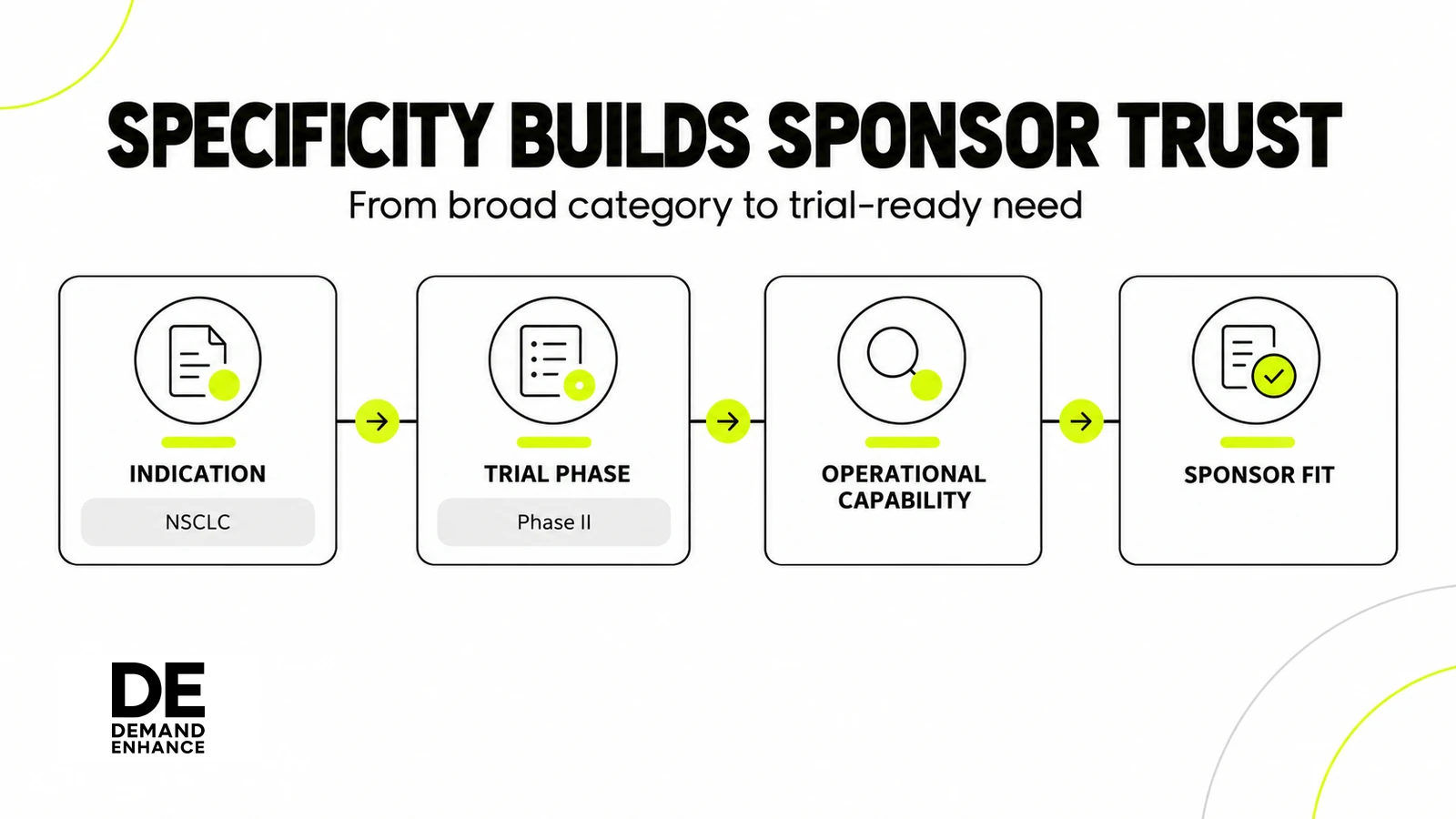
Oncology sponsor searches are significantly more specific than generic CRO searches. Understanding this specificity is the foundation of an effective oncology CRO SEO strategy.
Indication-specific searches
Oncology sponsors do not search for ‘oncology CRO’. They search for CROs with specific indication experience: ‘NSCLC Phase II CRO’, ‘triple negative breast cancer trial partner’, ‘AML clinical trial outsourcing’, ‘prostate cancer Phase III CRO’. These are low-volume but extremely high-intent terms. A biotech with an NSCLC programme who searches for ‘NSCLC Phase II CRO’ and finds a CRO that has dedicated NSCLC content is far more likely to shortlist that CRO than one that shows up on a generic ‘oncology CRO’ search.
Trial design and methodology searches
Oncology sponsors often search for expertise in specific trial designs and methodologies: ‘basket trial design CRO’, ‘platform trial oncology’, ‘adaptive design Phase II oncology’, ‘biomarker-driven trial design’. These searches indicate a sponsor who is actively planning a trial and looking for a partner with specific methodological expertise.
Patient population and endpoint searches
Oncology trials involve complex patient populations and endpoints that generate specific searches: ‘rare oncology indication enrollment’, ‘PFS vs OS endpoint considerations’, ‘ctDNA endpoint clinical trial’, ‘tumor mutation burden biomarker trial’. A CRO with scientific content in these areas demonstrates a level of oncology expertise that generalist content cannot match.
Regulatory and compliance searches
Oncology regulatory searches are a significant search cluster: ‘FDA Breakthrough Therapy designation process’, ‘oncology accelerated approval pathway’, ‘BLA oncology submission support’, ‘FDA REMS oncology clinical trial’. CROs with regulatory oncology expertise should be ranking for these terms — but almost none are.
Building the Oncology CRO Content Architecture
Oncology content planning checklist
- List indications and methods the CRO can substantiate, then identify the buyer question each proposed page would answer.
- Match each topic to an appropriate expert reviewer and evidence source before outlining claims about trials, endpoints, or regulatory pathways.
- Connect indication and methodology resources to the broader oncology service page without implying experience the organization has not verified.
Put the idea into practice
Choose the oncology content asset
Your CRO has approved information about a specific trial method and a broader oncology service page. What should the next asset clarify?
Explain the trial method
Choose this when the method is a distinct buyer question and the team can provide accurate, reviewed detail. Define its relevance and limits, then connect it to oncology services only where the CRO's scope supports that relationship.
Strengthen indication coverage
Choose this when buyers need to assess experience in a particular indication and the CRO has approved evidence for that topic. Describe supported experience precisely; avoid a standalone page if it would rely on generic claims.
Plan an evidence-led oncology cluster
Confirm capability
Ask the relevant internal owner which indications, methods, and operational details are approved for public discussion. Exclude topics that depend on unverified experience or unapproved claims.
Assign page roles
Choose a broad overview, indication resource, methodology explainer, or operational article based on the distinct sponsor question. Avoid splitting pages merely to repeat related terms.
Review and connect
Route clinical and regulatory statements to a qualified reviewer and relevant evidence. Add links between related pages so buyers can move from a specific question to the verified service scope.
Tier 1: Oncology pillar content
Your oncology SEO hub should be anchored by a comprehensive pillar guide that establishes your overall oncology expertise. This should cover: your approach to oncology trial design, your therapeutic area experience, your site network in oncology, your regulatory oncology capabilities, and your scientific leadership team in oncology.
This pillar page is the authoritative oncology destination on your site — it should link to every spoke article and service page in the oncology cluster, and it should be the page that other oncology content on the internet links to when referencing your organisation.
Tier 2: Indication-specific content
For each oncology indication you have significant experience in, build a dedicated content piece: your experience in that indication, the specific trial design challenges it presents, your approach to patient recruitment in that indication, and relevant programme examples. Target two to four indication-specific pieces per year, focused on the indications where your pipeline is strongest.
Tier 3: Methodology and expertise content
Build content around the specific oncology methodologies and expertise areas that differentiate your CRO: adaptive trial designs, biomarker-driven patient selection, early phase FIH programme management, global oncology site network management, or whatever is genuinely distinctive about your oncology capability.
Tier 4: Regulatory and operational content
Build content that addresses the regulatory and operational challenges specific to oncology: accelerated approval pathways, Breakthrough Therapy designation, complex protocol amendments in oncology, managing oncology-specific adverse event reporting. This content ranks for high-intent regulatory searches and demonstrates a level of regulatory oncology expertise that builds significant trust with clinical development teams.
Keyword Strategy for Oncology CROs
An effective oncology CRO keyword strategy has three tiers.
Tier 1: High-volume anchor terms (for authority building)
Terms like ‘oncology CRO’, ‘cancer clinical trial CRO’, and ‘oncology clinical trial outsourcing’ are your broad anchor terms. They may have moderate to high competition but low sponsor specificity. Target these with your pillar content and your oncology service overview page. Do not expect these to be your primary lead generators — they build domain authority in the oncology space.
Tier 2: Indication and methodology terms (for qualified traffic)
Terms like ‘NSCLC Phase II CRO’, ‘basket trial design support’, ‘rare oncology indication enrollment’ are your qualified traffic terms. Lower volume, higher intent, lower competition. Target these with your indication-specific and methodology content. These are your primary sponsor-quality traffic drivers.
Tier 3: Problem and challenge terms (for early-stage capture)
Terms like ‘oncology trial enrollment challenges’, ‘managing oncology protocol amendments’, ‘biomarker-stratified trial design considerations’ are your early-stage problem terms. Very low volume, very high intent, very low competition. Target these with operational and scientific content. These are the searches that happen when a sponsor is in the middle of planning or managing a complex oncology programme.
E-E-A-T in Oncology CRO Content
E-E-A-T requirements are particularly demanding for oncology content. Oncology is a life-or-death therapeutic area, and Google applies heightened scrutiny to content in this domain. For an oncology CRO, the E-E-A-T requirements are:
- Named authors with verifiable oncology clinical trial experience: PhDs in oncology, clinical pharmacology, or biostatistics; clinical research professionals with named oncology programme experience; medical directors with oncology trial background
- Expert reviewers for scientific content: any article that makes claims about oncology trial design, endpoints, or regulatory pathways should be reviewed by a named oncology MD or PhD
- Specific, verifiable programme claims: the number of oncology trials completed, the indications served, the regulatory outcomes achieved
- Primary source citations: FDA guidance on oncology drug development, NCI clinical trial design resources, ASCO/ESMO guidelines, published oncology trial methodology papers
Oncology Site Network and Geographic Considerations
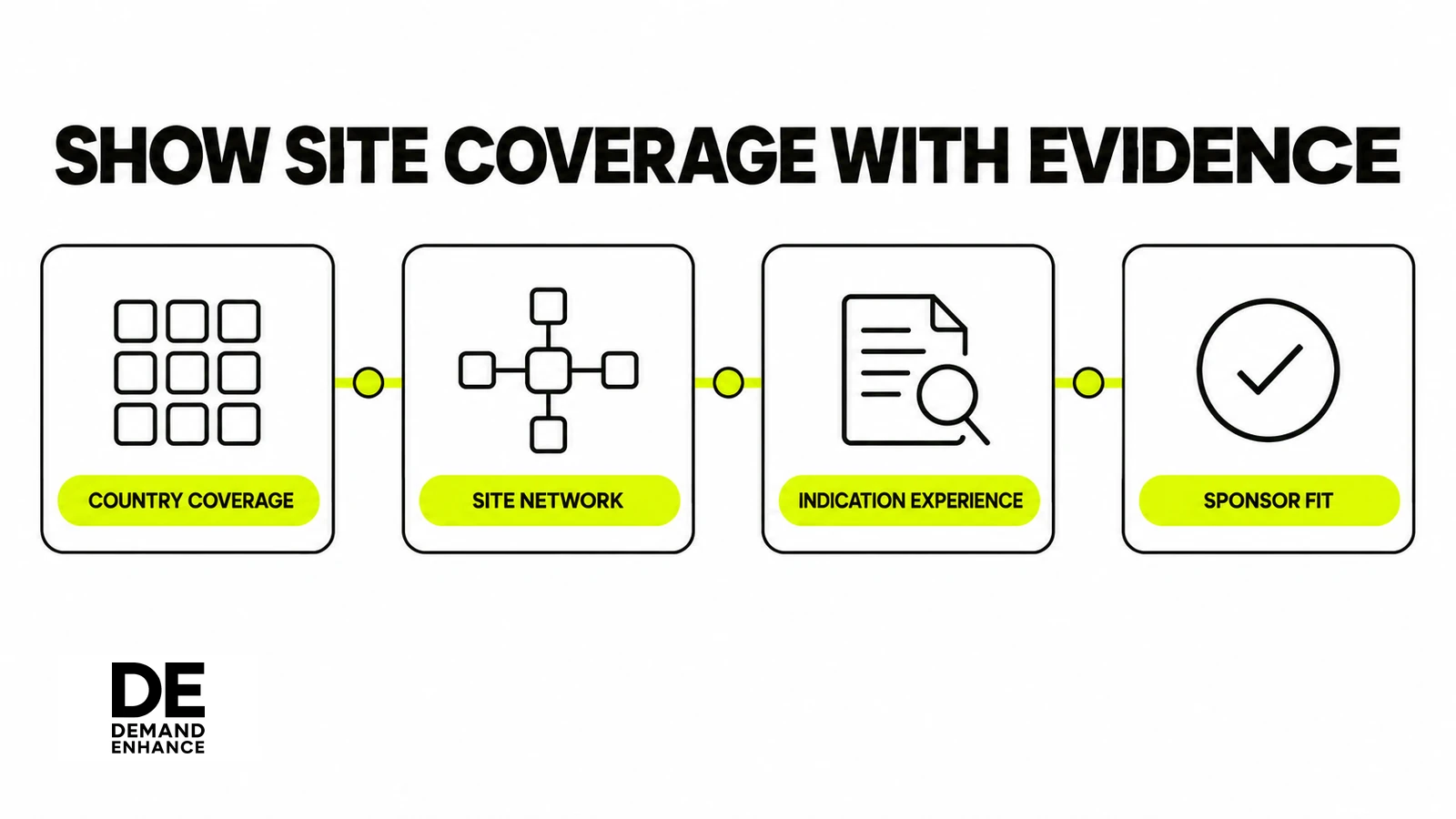
For oncology CROs with global capabilities, geographic and site network content is a significant SEO opportunity. Sponsors evaluating oncology CROs care deeply about site network quality and geographic coverage — and they search for it.
Build content around your oncology site network: the countries where you have established oncology sites, the site quality and performance metrics in your network, and your approach to site selection for complex oncology protocols. This content ranks for geographic and network queries that generic oncology CRO content does not address.
Next Steps
An oncology CRO SEO strategy built on indication specificity, methodology depth, and genuine scientific E-E-A-T is one of the most defensible competitive positions available to a CRO in a crowded market. The sponsors who search for oncology CRO partners with specific indication experience are the most valuable sponsors in the market — and they are significantly underserved by current CRO SEO.
Request an oncology CRO SEO audit from DemandEnhance. We will analyse your current search visibility in the oncology CRO space, identify the indication and methodology search terms you are missing, and build a content architecture roadmap specific to your oncology programme focus.
Frequently asked questions
Which oncology CRO topics should an SEO plan prioritize?
Start with indications, trial methods, operational challenges, and regulatory topics that match the CRO's documented experience. Prioritize areas where a qualified expert can review the content and the organization can support every capability statement.
When does an oncology topic deserve a separate page?
A separate page is useful when it answers a distinct sponsor question and the CRO can provide enough accurate, indication-specific detail. Avoid creating pages for indications or methods that the organization cannot substantiate with relevant expertise.
How can a CRO support technical claims on oncology pages?
Attribute content to qualified authors or reviewers where verified, cite sources that directly support scientific or regulatory statements, and state the scope and date of relevant information. Keep company capability claims grounded in approved operational evidence.
Sources and further reading
Demand Enhance
Prioritize oncology topics around real capability
Discuss an oncology search architecture aligned with your CRO's verified indications and methods with Demand Enhance. Bring the capability areas and evidence your team has approved for public use.
Discuss your priorities