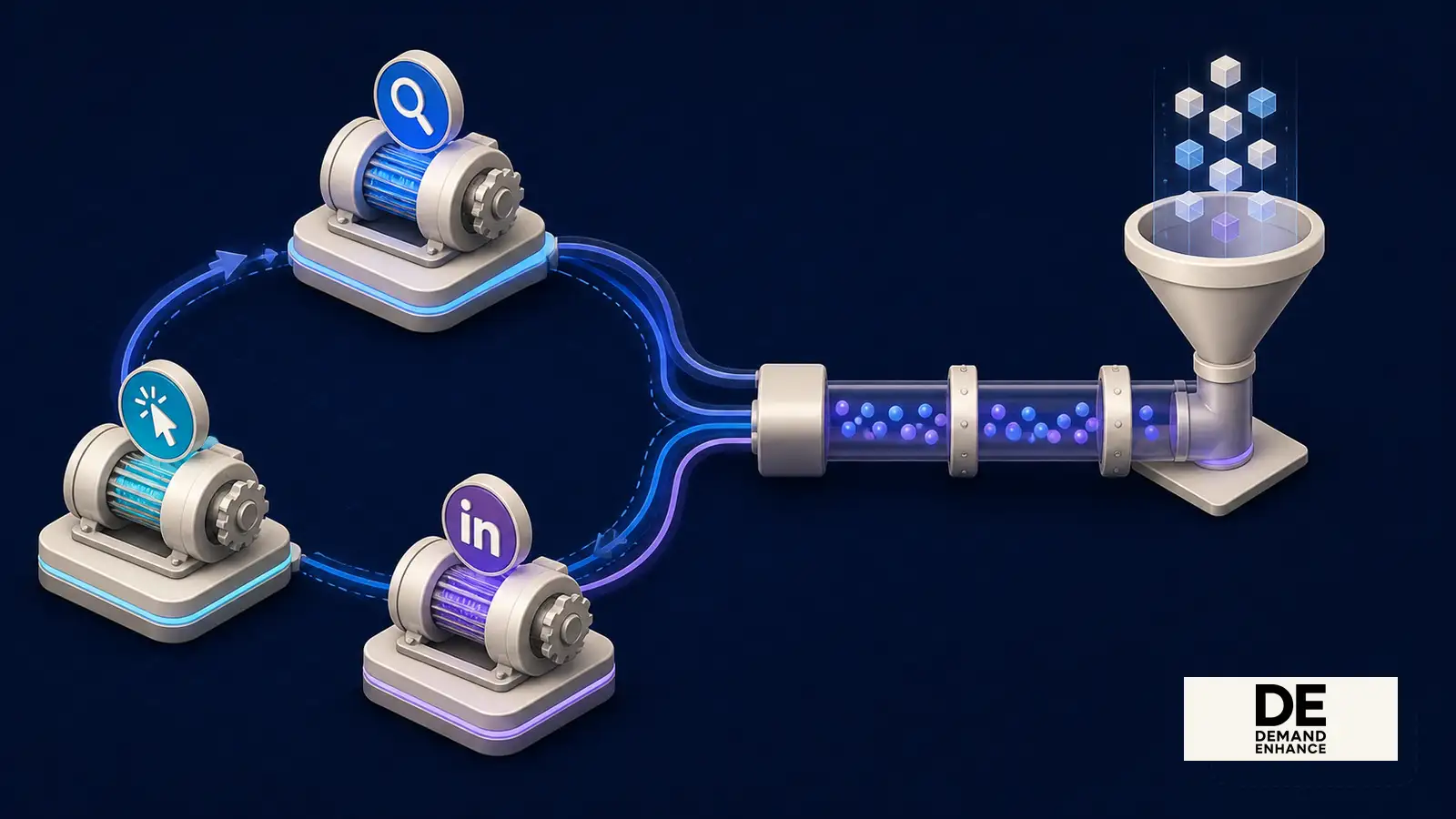
Most life science B2B marketing programmes run their channels in parallel but separately: an SEO agency managing content, a PPC consultant managing Google Ads, and a LinkedIn specialist managing sponsored content — each optimising for their own metrics, rarely coordinating, and leaving significant pipeline value uncaptured.
The opportunity in life science is to connect these three channels into a single, coordinated demand generation system. When SEO, PPC, and LinkedIn are integrated — sharing audience data, aligned on content, and sequenced to match the sponsor journey — the combined effect is substantially greater than the sum of the parts.
This guide explains how to build that integration: the technical connections, the content alignment, the audience sequencing, and the measurement framework that makes it work.
Why Integration Matters More in Life Science
In a typical B2C or short-cycle B2B market, channels can operate independently because the buyer journey is short enough that a single touchpoint can carry a conversion. In life science B2B, the journey is long, the buyer committee is large, and trust is built through multiple exposures over months.
In this context, a sponsor who sees your LinkedIn content but has never read your blog, or who clicks a Google Ad but has never seen your thought leadership, is a much harder conversion than a sponsor who has encountered your brand across multiple contexts over time. Integration is not a nice-to-have — it is a fundamental requirement for efficient life science lead generation.
The Three-Channel Model
SEO: Your long-term authority engine
SEO generates the content that the other two channels amplify. Your blog articles, service pages, and therapeutic area guides are the substance of your brand — the evidence that a sponsor evaluates when deciding whether you are credible. Without strong SEO content, PPC and LinkedIn are driving traffic to a website that cannot convert.
SEO also generates the audience data that powers your other channels: visitors who read specific articles become retargeting audiences for PPC and LinkedIn, and organic keyword performance data informs which PPC terms to bid on and which LinkedIn content themes to pursue.
PPC: Your immediate demand capture engine
PPC captures sponsors who are actively searching for specific services right now. It covers the high-intent, commercial-stage terms that are too expensive to rely on SEO for exclusively — ‘Phase II CRO partner’, ‘CDMO for biologics’, ‘clinical trial outsourcing RFP’. PPC also allows you to retarget organic visitors with specific messages calibrated to what they have already read.
LinkedIn: Your audience and relationship engine
LinkedIn Ads reaches sponsors by who they are, not what they are searching for. It allows you to build visibility with precisely defined buyer personas — clinical operations directors at biotech companies in Phase II, formulation leads at mid-size pharma — regardless of whether they are actively searching for your services. LinkedIn is particularly valuable for the problem awareness and solution exploration stages of the sponsor journey, where sponsors may not yet be searching actively but are receptive to relevant content.
The Integration Architecture
Step 1: Unified audience definition
The foundation of integration is a shared ICP definition that all three channels can target. Define your primary sponsor persona in terms that each channel can action: for SEO, the keywords they search; for PPC, the specific search terms and negative keywords that filter out non-sponsors; for LinkedIn, the job title, seniority, industry, and company size filters.
This shared ICP definition ensures that all three channels are reaching the same type of buyer — not just whoever happens to be reachable through each channel’s native targeting.
Step 2: Content alignment
Your SEO content should inform your PPC ad copy and your LinkedIn sponsored content. If your most-engaged organic article this month is about Phase II enrollment delays, that is the topic your PPC retargeting ads should reference and the content your LinkedIn audience should see.
Conversely, PPC keyword performance data — which terms are generating clicks from sponsors with high engagement depth — should inform your SEO content roadmap. If a PPC term you did not expect is generating strong sponsor traffic, it is a signal to build deeper organic content around that topic.
Step 3: Audience sequencing
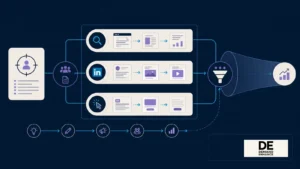
Design a deliberate sequence for how sponsors encounter your brand across channels. A practical model for life science:
- First encounter via organic search (SEO): sponsor finds a problem-awareness article through Google
- LinkedIn amplification: visitor becomes part of a matched audience on LinkedIn; sponsored content shows them a case study or service overview
- PPC retargeting: visitor is retargeted on Google with a specific ad for the service page most related to the article they read
- Final conversion: sponsor returns to the site via direct visit or branded search and submits a form
In this model, SEO initiates the relationship, LinkedIn deepens it, and PPC captures the sponsor at the point of active vendor evaluation. Each channel plays a specific role in the journey rather than competing for attribution.
Step 4: Shared measurement
For integration to work, measurement must be shared. This means a single attribution model that credits all three channels for their role in a conversion — not last-click attribution that gives all credit to whichever channel the sponsor used for their final session.
Set up GA4 with data-driven attribution, connect your LinkedIn Ads account for cross-channel analysis, and tag all PPC and LinkedIn traffic with UTM parameters that allow you to trace channel touchpoints in your CRM. The goal is a single pipeline report that shows the channel contribution of every opportunity, not separate channel reports that each claim credit for the same lead.
Content Repurposing Across Channels
One of the most practical benefits of channel integration is the ability to repurpose content across channels efficiently. A single well-researched blog article can generate:
- Organic search traffic via SEO
- A PPC retargeting audience from visitors who read the article
- Three to five LinkedIn post variants for your organic company page
- One LinkedIn sponsored content unit targeting your ICP audience
- One email newsletter summary for existing contacts
- One lead magnet (checklist or framework) that creates a conversion point
This multiplier effect means that your content investment in SEO creates fuel for all your other channels — dramatically improving the return on each piece of content you produce.
Common Integration Mistakes
- Running PPC on the same keywords as your SEO targets without a clear division of responsibility: PPC should cover the most competitive commercial-stage terms; SEO should cover the longer-tail problem and solution exploration terms
- LinkedIn targeting that is too broad: if your LinkedIn audience is ‘healthcare professionals’, you are reaching almost everyone in the industry, not the specific sponsor personas who are likely to become clients
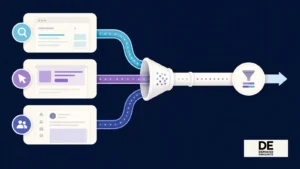
- No retargeting connection between SEO and PPC: if your PPC campaigns are not retargeting your organic visitors, you are leaving your highest-intent audience unreached by paid media
- Separate agency relationships with no shared briefing: if your SEO agency, PPC consultant, and LinkedIn specialist are not in regular communication and working from the same ICP and content plan, integration is impossible
Next Steps
Building an integrated SEO, PPC, and LinkedIn demand generation system is a programme, not a campaign. It requires a shared strategy, shared measurement infrastructure, and ongoing coordination across channels.
If you are currently running these channels separately and want to understand the pipeline value you are leaving uncaptured, request an integrated channel strategy session with DemandEnhance. We specialise in life science B2B and can build the integration architecture specific to your sponsor acquisition goals.