
In life science B2B, the standard SEO measurement framework — traffic, rankings, bounce rate — is almost completely disconnected from commercial value. A CRO or CDMO that receives 10,000 monthly organic visitors but generates zero qualified sponsor conversations from SEO has failed at content marketing, regardless of what their analytics dashboard says.
How to Measure Lead Quality from SEO in Long-Sales-Cycle Life Science Companies
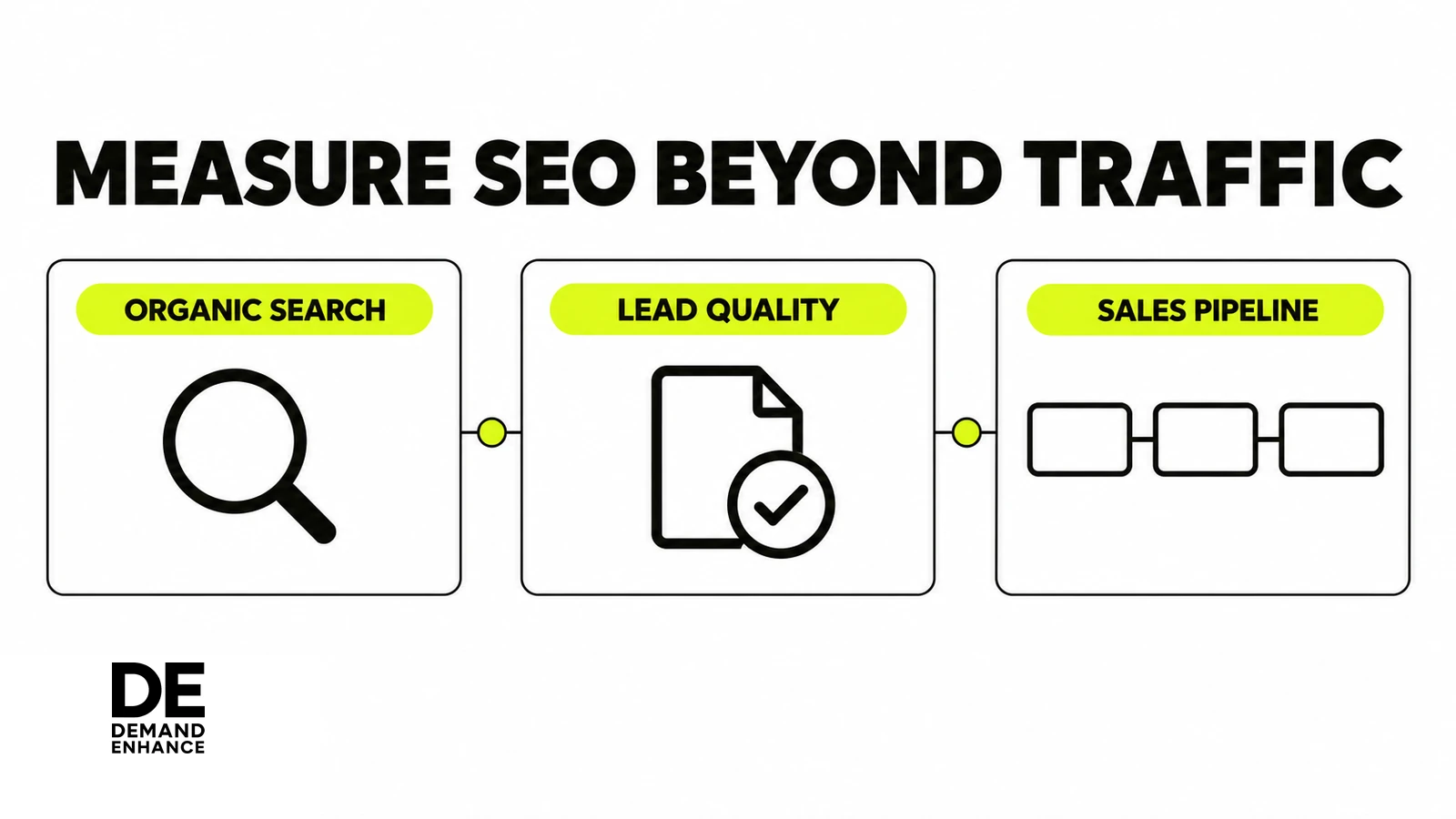
The problem is attribution. Life science sales cycles are long — often six to eighteen months from first content interaction to signed contract. Multiple stakeholders are involved. The initial organic search visit may precede the conversion by many months and many touchpoints. Standard analytics tools treat this as a dead end: the organic channel gets no credit, and the SEO investment looks like it is performing poorly.
This guide shows you how to build a lead quality measurement framework for life science SEO that connects organic search activity to pipeline value — even across long sales cycles with multiple decision-makers.
Why Standard SEO Metrics Fail in Life Science
Standard SEO metrics were designed for short sales cycles with single decision-makers and direct online conversions. In life science B2B, none of these conditions apply.
A biotech director who reads three of your blog articles over six months before submitting an RFP inquiry will appear in your analytics as three separate organic sessions with no visible connection. The RFP form submission may be attributed to a direct visit or a sales email, with organic search receiving no credit at all.
The result is a systematic undervaluation of SEO in life science. Companies that invest in SEO and try to measure it with standard metrics conclude that it is not working — when in fact it may be a significant driver of pipeline they simply cannot see.
The Life Science SEO Measurement Framework
A practical life science SEO measurement framework has four layers.
Set up a lead-quality review
- Agree with sales on lead qualification using organization type, role, service fit, geography, and relevant programme context.
- Record permitted content interactions and conversion events consistently, then connect them to CRM stages where data access allows.
- Report first-touch, assisted, and opportunity observations with the model assumptions, consent limits, and missing records stated.
Put the idea into practice
Choose how to define lead quality
A team is comparing organic inquiries but has inconsistent qualification data; what should it establish first?
Adopt a fixed score
A score can help organize agreed signals after the team has tested definitions and data quality. Avoid setting thresholds before sales and marketing align on what qualifies; otherwise, a precise-looking number may hide inconsistent assumptions.
Define lifecycle stages
Choose this when teams use different meanings for inquiry, qualified lead, and opportunity. Agree the criteria and recordkeeping first, then decide whether a score adds useful detail to the shared definitions before comparing channel performance.
Build a measurement loop
Define qualification
Agree with sales which organization, role, service-fit, and programme details define an appropriate inquiry, and document how each lifecycle stage is assigned in the measurement plan.
Record interactions
Choose meaningful analytics events and content fields, confirm they are collected consistently and with appropriate consent, and connect them to CRM records where feasible under the documented plan.
Review attribution
Compare search, content, lead, and opportunity records using a stated model, then report gaps and avoid treating correlation or one touchpoint as definitive credit, before drawing commercial conclusions.
Select a step to explore the idea.
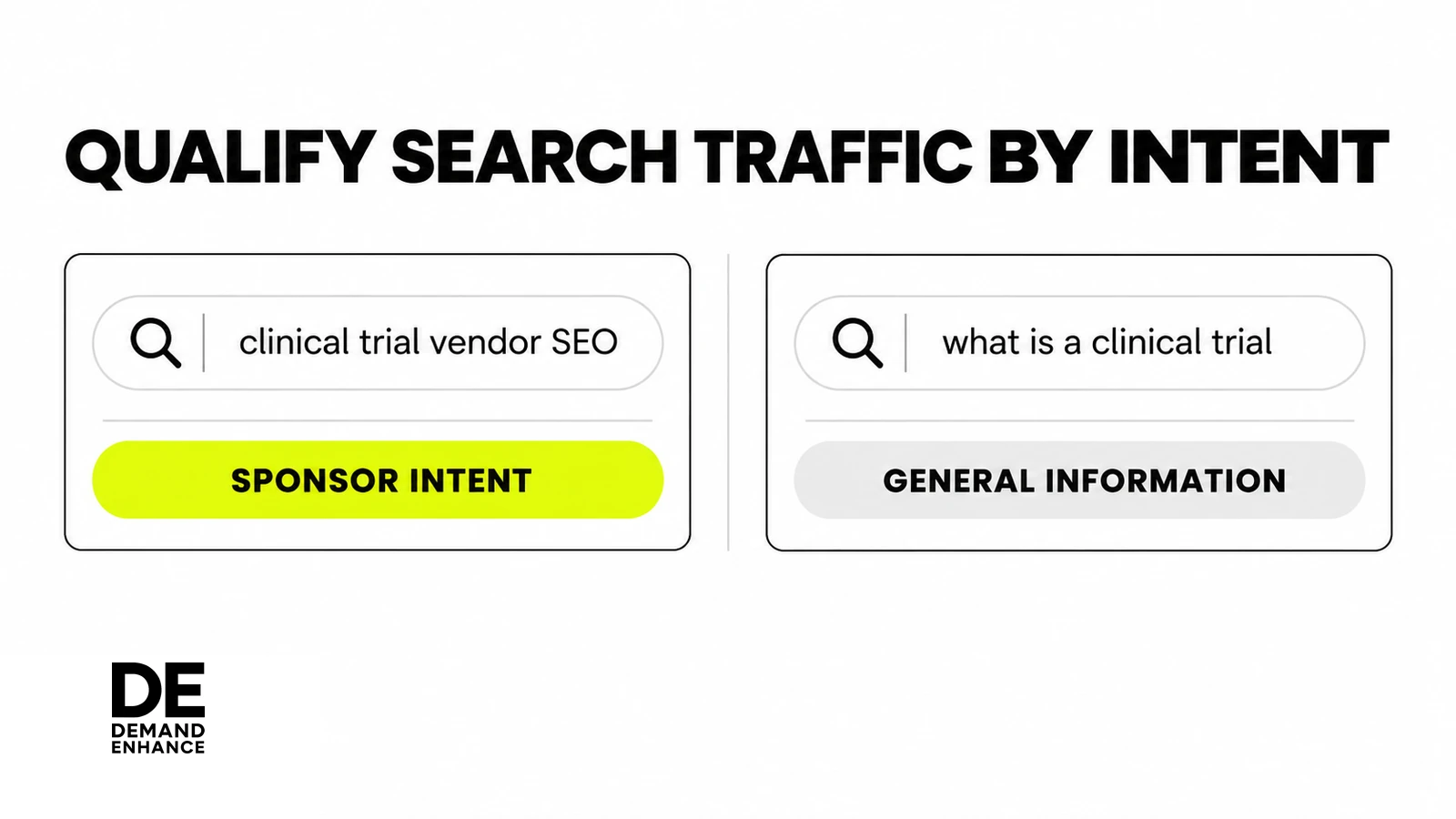
Layer 1: Sponsor-intent traffic
Not all organic traffic is equal. A session from someone searching for ‘clinical trial vendor SEO’ has far more commercial value than one from someone searching for ‘what is a clinical trial’. Your first measurement priority is to separate sponsor-intent traffic from general informational traffic.
Do this by tagging your content and keyword sets by intent signal: commercial-intent keywords include service category terms, vendor evaluation terms, RFP-adjacent terms, and problem terms from ICP-matched buyer profiles. Track the volume and trend of sponsor-intent sessions separately from total organic sessions.
Layer 2: Engagement depth
Sponsor-intent sessions are more valuable when they demonstrate engagement depth. Track these metrics for sponsor-intent sessions: pages per session, time on service pages, case study downloads, and scroll depth on key content. A sponsor who reads your Phase II oncology capability page, then reads two case studies, then downloads a capability overview is a very different lead signal from someone who bounced after reading a blog title.
Layer 3: Assisted conversion tracking
This is the most important and most commonly missing layer in life science SEO measurement. Assisted conversion tracking uses multi-touch attribution to identify organic search sessions that appear anywhere in the conversion path — not just the final session before a form submission.
Set up a multi-touch attribution model in Google Analytics 4 or your CRM. For every lead that submits a form, trace back their session history. Identify which organic sessions appeared in their path, which articles they read, and how far before the conversion those sessions occurred.
Layer 4: Pipeline attribution
Using AI SEO and Agentic SEM reporting may help teams organize observed organic and paid-search interactions alongside CRM milestones. After an analytics audit, commercial operations leaders should review data coverage, consent, and attribution limits before reporting; these methods do not directly connect every touchpoint to an opportunity.
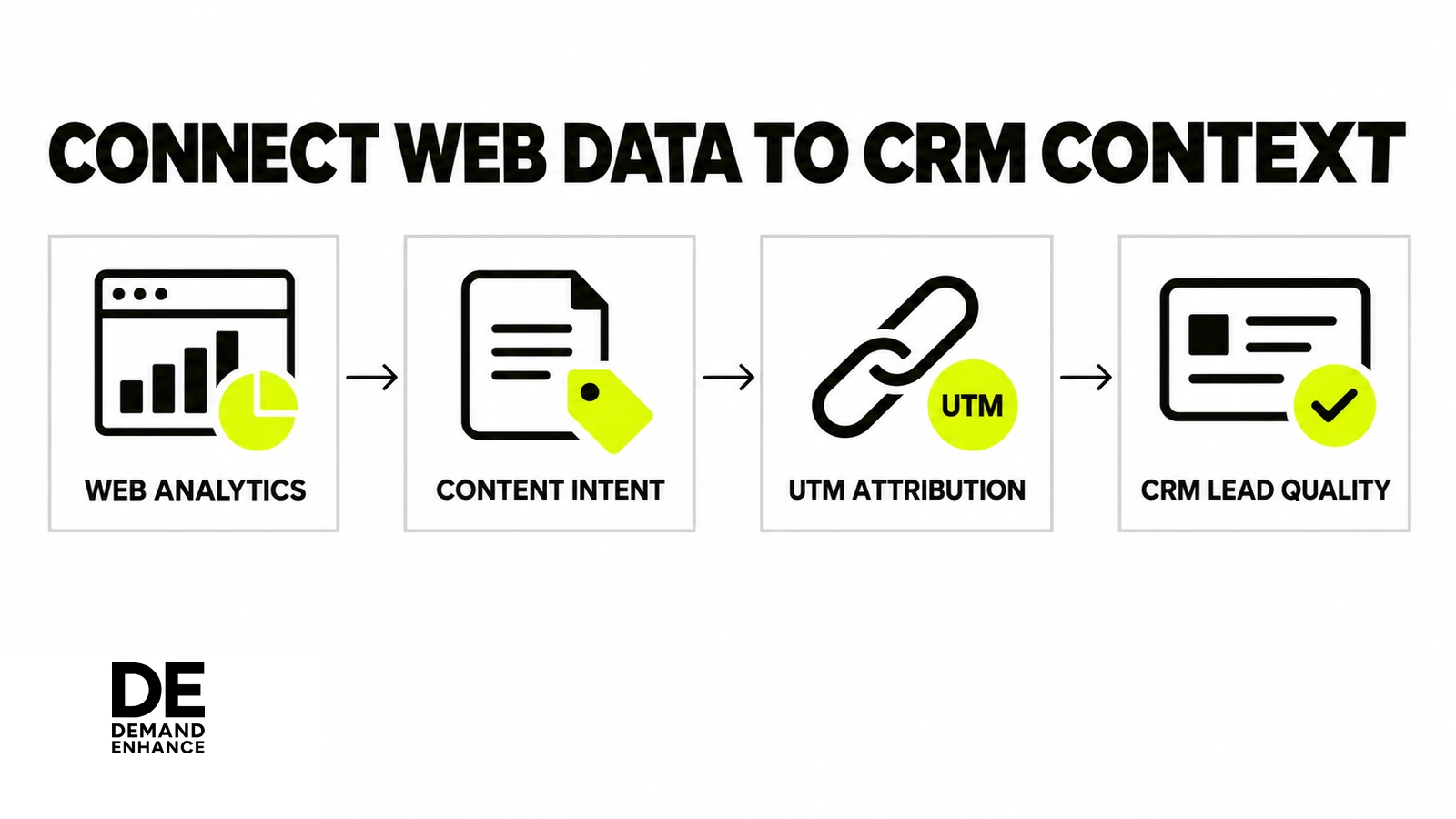
The ultimate measurement layer is pipeline attribution: connecting SEO activity to qualified opportunities in your CRM. This requires integration between your web analytics and your CRM, and a process for recording the content history of every lead at the point of CRM entry.
At a minimum, record: the first organic search session (first touch), the most recent organic search session before the conversion (last touch), and the most engaged organic session (which article generated the longest engagement time). These three data points give you a workable picture of SEO’s role in the pipeline.
Defining Lead Quality in Life Science
Before you can measure lead quality, you need a clear definition of what a quality lead looks like. In life science B2B, quality is typically defined by a combination of company profile and engagement signals.
Company profile signals
- Organisation type: biotech, pharma, medical device, academic institution
- Programme stage: pre-IND, Phase I, Phase II, Phase III, commercial
- Therapeutic area: matches your service focus
- Geography: matches your service coverage
- Company size: matches your typical client profile
Engagement signals
- Pages visited: service pages, case studies, and therapeutic area content indicate higher intent than blog-only visitors
- Content type engaged: a sponsor who has downloaded a capability overview is more qualified than one who has only read general blog articles
- Session recency and frequency: multiple visits over a short period indicate active vendor evaluation
- Form field quality: the role and organisation entered in your contact form are immediate quality signals
Building a Lead Quality Scorecard
A lead quality scorecard assigns numerical weights to company profile and engagement signals, producing a score for each lead that allows you to compare lead quality across channels and content types.
A simple scorecard might look like this:
- Biotech or pharma company (not agency or academic): +20 points
- Programme in Phase I–III (active development): +15 points
- Therapeutic area match: +15 points
- Visited at least one service page: +10 points
- Downloaded a lead magnet: +10 points
- Two or more sessions: +10 points
- Senior role (Director or above) in form submission: +10 points
- Referral from a named industry publication: +10 points
Assign total scores and define thresholds: 70+ points is a sales-qualified lead, 40–69 is a marketing-qualified lead, below 40 is informational. Track the average lead quality score from organic search over time, and compare it to other channels.
Communicating SEO Value to Leadership
One of the most common challenges for life science marketing directors is communicating the commercial value of SEO to leadership teams that are accustomed to measuring marketing by immediate pipeline contribution.
The most effective approach is to present SEO value in pipeline language. Rather than reporting ‘we increased organic traffic by 40%’, report ‘SEO-assisted leads in Q1 had an average lead quality score of 67, compared to 52 for paid search. Of the five opportunities that reached the RFP stage this quarter, three had organic search sessions in their first-touch attribution.’
This reframes SEO from a traffic metric to a pipeline quality driver — which is what it actually is in life science B2B.
Practical Steps to Get Started
- Set up GA4 with multi-touch attribution enabled
- Tag all content by intent level (sponsor-intent vs general informational)
- Connect your web analytics to your CRM using UTM parameters
- Build a lead quality scorecard aligned to your ICP
- Run a retrospective attribution analysis on your past 12 months of converted leads
- Set a quarterly cadence for reviewing lead quality scores by channel and content type
Next Steps
Measuring lead quality from SEO in a long-sales-cycle life science company is a project, not a report. It requires technical setup, process design, and a shift in how you define and communicate marketing performance.
Download the DemandEnhance Lead Quality Scorecard template to start building your measurement framework, or request an analytics audit to assess how well your current setup is capturing SEO’s contribution to pipeline.
Read the signals together
| Signal | What it helps assess | Interpretation |
|---|---|---|
| Inquiry volume | How many people contact the team | Separate duplicate or irrelevant inquiries |
| Qualified inquiries | Fit with agreed buyer criteria | Keep criteria consistent between periods |
| Sales progression | Movement toward a commercial conversation | Account for the longer buying cycle |
Frequently asked questions
How can SEO be assessed across a long B2B sales cycle?
Combine search and landing-page indicators with permitted first-touch, interaction, and CRM-stage data. Choose an attribution approach that fits the available records, report its assumptions, and avoid treating any single model as a complete account of SEO’s contribution.
What makes a life science lead qualified?
Define qualification with sales and subject-matter stakeholders using relevant organization, role, service fit, geography, and programme context. Review whether the lead progresses through agreed stages; do not treat a form submission or an arbitrary score as proof of value.
Which GA4 events can support SEO lead measurement?
Events can record meaningful interactions such as form submissions or resource requests when configured accurately and lawfully. Define each event, test its collection, and connect it with suitable CRM context before using it to interpret lead quality.
Sources and further reading
Demand Enhance
Make SEO reporting useful to sales
Bring your current analytics events, lead definitions, and CRM stages to a measurement review with Demand Enhance. Clarify which records can connect organic interactions with qualified opportunities and where attribution remains limited.
Discuss your priorities