The conventional view of contract development and manufacturing organization (CDMO) procurement relies heavily on formal Request for Proposal (RFP) processes and direct procurement channels. However, relying exclusively on an RFP-led mentality may obscure earlier phases of buyer behavior. Frequently, before a biotech procurement team or an outsourced technical lead issues a formal technical package, preliminary research takes place. During this discovery phase, technical evaluators might seek to identify which manufacturing partners possess the requisite scale, capability, and availability for their specific modalities. This search period represents a potential marketing opportunity. A strategically executed approach to search engine discovery makes a CDMO’s verified capabilities visible to technical leaders before evaluation criteria become rigidly set.
SEO for CDMOs: How to Attract Biotech Buyers Before the RFP Stage
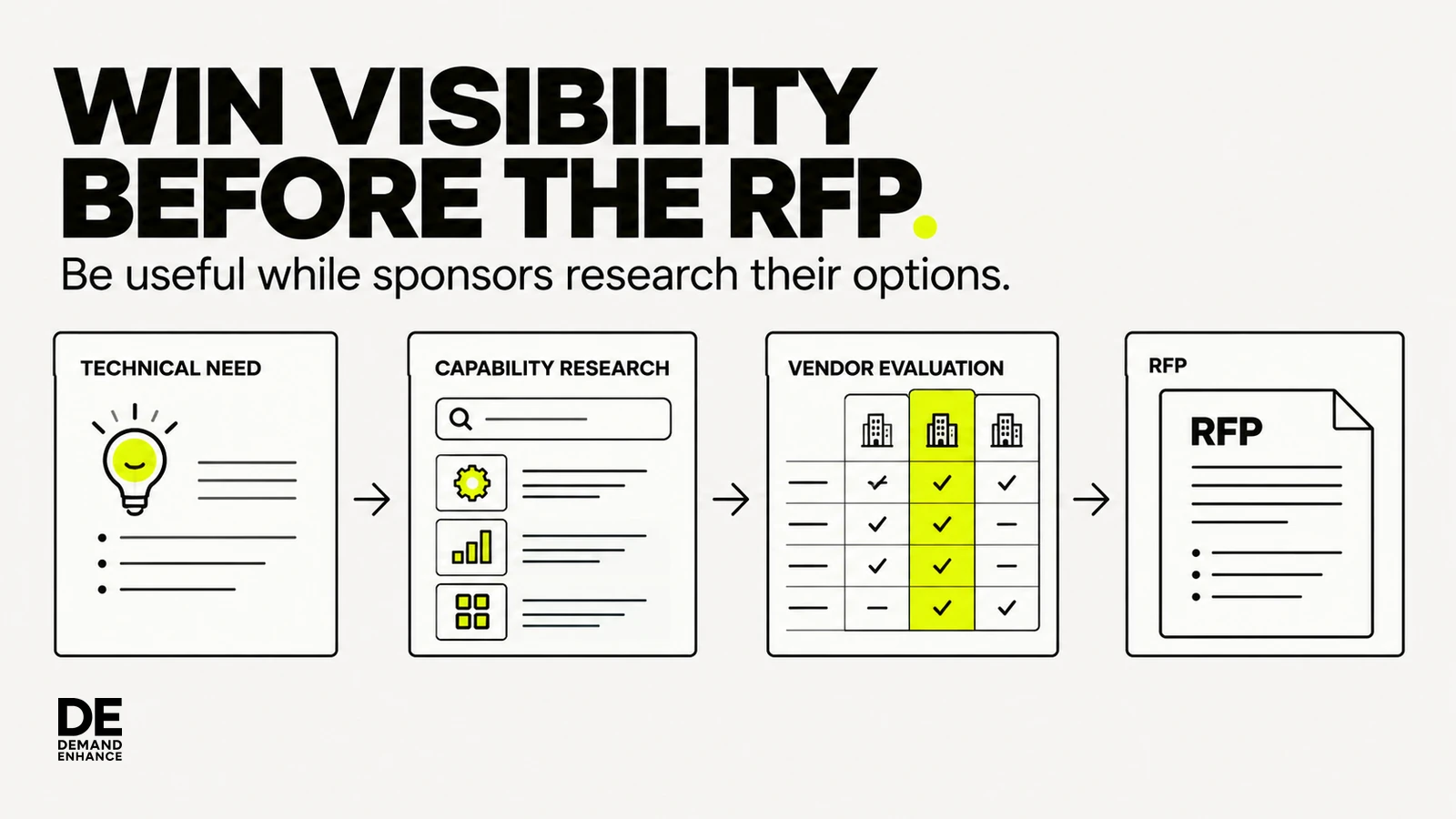
Operating under the assumption that SEO does not matter in complex B2B engagements is often a strategic oversight. The supplied evidence does not show that organic visibility secures a place on a vendor shortlist. Accessible, well-structured information can help a technical team decide whether a CDMO’s public scope merits further consideration. A CDMO that explains its verified operational capacity, available equipment, and unit operations can help technical teams compare the stated scope and decide whether to ask follow-up questions. Before an RFP is issued, a public site can give early researchers a place to check a CDMO’s stated scope, though the timing and effect on selection will vary. Treating discovery as a critical pre-RFP opportunity provides a pragmatic framework for organizing public information effectively, framing current conversations around specific operational strengths rather than forcing the provider to mere reaction later.
Map the capabilities your buyers need to evaluate
Using Agentic SEO may help CDMOs review early-stage formulation and process-development search themes before an RFP. A scoped pilot after a technical audit can organize candidate terms; manufacturing specialists should check terminology, service scope, and supporting evidence before technical resources are published.
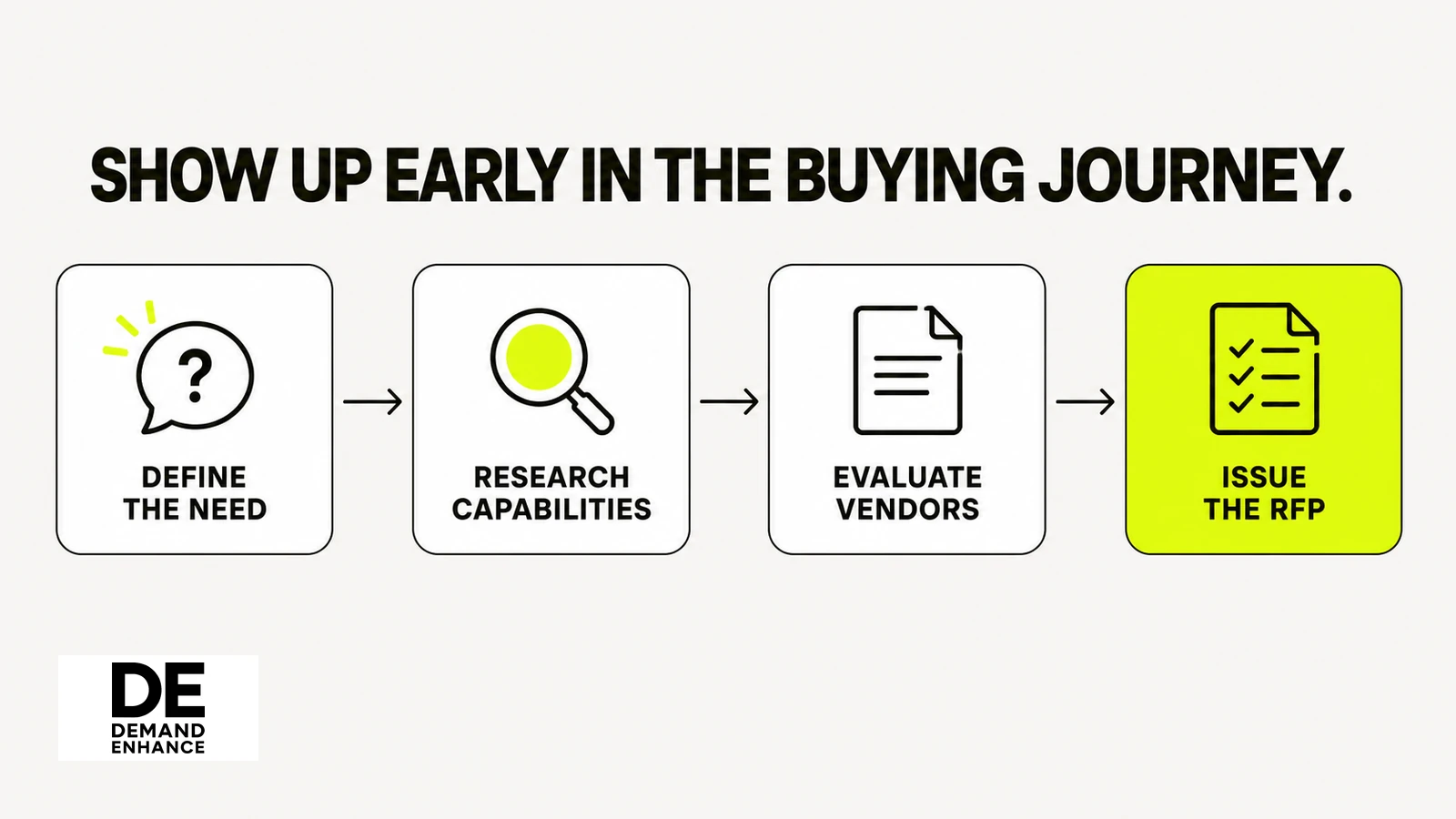
To capitalize on pre-RFP discovery, CDMOs should map their verified capabilities directly to the technical information prospective buyers actively evaluate. This mapping requires abandoning broad marketing narratives in favor of a granular architecture that honestly reflects the reality of facility operations. Technical stakeholders typically do not begin searches looking for a broadly "trusted pharmaceutical partner"; instead, they look for highly specific manufacturing modalities, equipment scales, and processing methods adapted to their precise molecule.
Constructing this map means rigorously documenting exactly what the organization executes on the facility floor. This mapping could include outlining specific upstream cell culture processes, downstream purification methodologies, analytical testing techniques, and supported phases of clinical or commercial manufacturing. When a website’s categorization genuinely mirrors a sponsor’s technical needs, it serves as a functional tool facilitating precise matching rather than merely accumulating unqualified traffic. A rigorous mapping exercise prevents companies from obscuring true operational strengths behind vague corporate terminology, presenting evaluators with precise specifications to formulate an early evaluation list.
Beyond listing equipment, effective capability mapping contextualizes available infrastructure. Rather than merely stating that a facility offers formulation development, the digital representation should clarify the scale of mixing vessels, types of active ingredients handled, and specific environmental controls. This depth of detail removes guesswork for reviewers and provides immediate clarity. When engineers perform initial scoping queries, they search for parameters matching their processes. A structure reflecting these operational constraints can turn an informational search into a relevant technical confirmation.
Separate service lines, modalities, and development stages only where the company offers them
A foundational recommendation for website architecture is to structure pages around distinct services, perfectly conditional upon actual capability. A CDMO should only separate service lines, therapeutic modalities, or development stages if the company genuinely possesses validated operations for each category. Creating separate pages for microbial fermentation and mammalian cell culture is useful only if the CDMO actively manages dedicated equipment and offers distinct workflows for both. Do not artificially inflate the content catalog in an attempt to capture broader search real estate. This strategic alignment is essential when considering how to build a CRO SEO content hub that attracts sponsors, not just traffic. Presenting hypothetical services damages credibility when buyers eventually seek verification during a deeper audit.
If a facility handles early-phase toxicology batches exclusively, the search footprint should clearly reflect that specific bandwidth rather than implying full-scale commercial manufacturing readiness. Accurately segmenting content ensures specific pages remain dense with verifiable detail, rather than stretched thin over aspirational offerings. This targeted approach prevents the dilution of core scientific expertise and ensures technical inquiries align directly with the site’s current capabilities.
Use the terminology customers and technical teams recognize
Translating facility operations into public content requires using vocabulary that early-stage researchers and manufacturing scientists use in daily operations. While internal marketing departments may prefer proprietary naming conventions, prospective buyers typically conduct queries using established pharmaceutical nomenclature. As observed by Marzipan in its public life-sciences SEO guide detailing their perspective on technical terminology and keyword strategy, aligning directly with the scientific community’s established lexicon is crucial for discoverability. If a CDMO operates aseptic fill-finish lines for biologics, content should explicitly use industry-standard terms detailing exact vial sizes, lyophilization configurations, and isolator technologies, reflecting what technical teams require.
Employing accurate, standardized terminology extends to every aspect of written content, from header structures to the labeling of equipment lists. Avoid renaming standard unit operations or well-known analytical methods simply for the sake of marketing novelty. Clarity supersedes creativity when a scientist attempts to verify whether a partner can execute a specific chromatographic technique. Using recognizable language immediately signals technical competence and minimizes friction for researchers attempting to parse documented capabilities.
Build useful pages around questions, not slogans
Technical buyers assessing a CDMO are often trying to answer concrete, structured questions regarding capacity, competence, and available infrastructure. Consequently, website architecture should logically answer these questions, rather than serving as a repository for unsubstantiated marketing slogans. Prospective sponsors might need comprehensive details about process flow, analytical integration, and facility constraints to determine if the CDMO represents a viable technical match. Exploring the public perspective discussed in Forma’s introduction to SEO for life-science and biotech marketing, optimizing on-page elements means providing genuine utility to the reader. When a service page meticulously unpacks the reality of a manufacturing workflow, it transitions from a traditional brochure into an empirical qualification tool assisting buyers with initial evaluations.
Structuring content around practical questions requires anticipating the technical friction points sponsors commonly experience when outsourcing development. Instead of simply asserting operational excellence, public content could preemptively address how the facility generally handles complexities of tech transfer, analytical method qualification, and process characterization. By structuring headers and sections as direct responses to critical inquiries, the page becomes a highly scannable, informative resource respecting the evaluator’s limited time.
Pre-RFP information readiness checklist
- List the operational capabilities, equipment, and development stages the facility can verify and publicly disclose.
- Use recognized technical terminology and organize pages around questions a biotech evaluator can assess before preparing an RFP.
- Connect discovery content to a proportionate next step, then compare inquiries with stated scope and sales feedback.
Put the idea into practice
Choose the pre-RFP information asset
An early-stage evaluator needs to compare technical fit, but some project detail is confidential. What should the website provide?
Publish approved facility scope
Choose this when the information describes current, non-confidential operations. Explain relevant equipment, processes, and boundaries with approved details, and reserve sponsor-specific data or project plans for an appropriate confidential discussion through the organization's established channels.
Clarify the evaluation question
Choose this when buyers need help understanding a process or capability category first. Create a focused explainer that addresses the question without implying the facility performs every method mentioned; link to services only where verified.
Prepare for pre-RFP discovery
Inventory public facts
Work with facility owners to identify accurate equipment, process, scale, and development-stage information approved for publication. Exclude client-specific details and any capability that cannot be verified.
Organize buyer questions
Group the information around modalities and operational questions that technical evaluators can use to assess scope. Keep separate services distinct only when the organization genuinely offers them.
Connect the next step
Link each resource to the relevant capability page or a suitable contact route. Compare inquiries with actual service fit, then update content when feedback shows a mismatch.
Explain scope, process, inputs, constraints, and evidence
To make service pages genuinely useful, a CDMO should detail the exact scope and mechanical execution of its offerings. A page might articulate necessary starting materials, sequential operational steps, physical boundaries of the facility, and any inherent procedural constraints. Setting practical expectations regarding standard scale limitations or required technology transfer parameters can provide immense value to a biotech sponsor mapping out project plans. Furthermore, incorporating verified evidence—such as non-confidential equipment lists, standardized batch sizes, and explicitly documented operating conditions—can transform vague claims into observable competence. Understanding how to structure life science content so Google and AI tools understand your expertise ultimately relies on this precise articulation of operational reality.
Including selected details about material inputs and procedural constraints demonstrates that the CDMO operates in reality, where specific requirements must be met for a successful campaign. Acknowledging constraints openly—such as specifying minimum titer requirements or outlining limits on available bioreactor volumes—attracts an appropriately qualified audience whose project parameters realistically match existing bandwidth. This transparent approach actively fosters an environment of practical problem-solving.
Make public information accessible and keep confidential details protected
A persistent internal barrier to publishing technical capability details in the CDMO space is the perceived risk to intellectual property and client confidentiality. However, it is entirely possible to provide rigorous technical outlines without exposing proprietary sponsor data. We explicitly recommend publishing only verified, approved, non-confidential facility information. Outlining mechanical specifications of a chromatographic column or the baseline particulate classification of a cleanroom suite is a simple statement about the CDMO’s infrastructure, not an exposure of a specific client’s master batch record.
Never suggest exposing confidential specifications, and avoid making unsubstantiated claims regarding universal non-disclosure agreement practices, since legal and procedural norms vary widely. CDMOs can robustly market physical and procedural assets while maintaining strict adherence to sponsor privacy. The goal is to focus entirely on static, owned capabilities of the facility itself—the stainless steel, established analytical instruments, and standard operating procedures governing the site. By limiting published details to non-confidential operational facts, technical marketing safely proceeds without crossing strict boundaries required to protect sensitive therapeutic development information.
Connect technical content to a clear commercial next step
Attracting early-stage research traffic may hold minimal business value if the website lacks a definitive mechanism to translate visibility into an appropriate commercial discussion. Every capability page should logically progress toward a clearly defined next step proportionate to the prospective buyer’s position in the discovery phase. Early in the research lifecycle, aggressive sales interventions can be counterproductive; instead, prospects may need technically sound resources or the ability to escalate their inquiry to a qualified internal expert.
Providing structured opportunities for engagement builds trust incrementally. For a biotech startup investigating scale-up feasibility, offering a standard, non-confidential facility equipment overview document might be a logical progression. For teams closer to initiating formal RFP procedures, presenting a direct option to engage with a regional subject matter expert or site operations director is often appropriate. Implementing varied qualification pathways allows the CDMO to evaluate the incoming prospect just as the prospect evaluates the facility. Marketers should seamlessly offer options for technical stakeholders to contact your team with preliminary scoping questions, ensuring the critical transition is facilitated professionally and without unnecessary friction.
Measure qualified engagement without treating rankings as pipeline
A mature CDMO marketing strategy should evolve past superficial performance metrics. Treating isolated keyword ranking positions or aggregate website visitor volume as direct indicators of pipeline health is often a fundamental error. B2B life science manufacturing operates within highly specific commercial environments where the technical quality and exact fit of an inquiry drastically outweigh the sheer quantity of general site visitors. Discoverability only provides a tangible business return when it effectively connects the CDMO with a scientifically relevant, technically qualified buyer who requires the exact services provided.
Therefore, marketing leadership should rigorously focus on measuring qualified engagement. This involves analyzing exactly which technical capability pages contribute to inquiries from organizations that might fit the CDMO’s realistic customer profile—specifically those requiring the modalities, scale, and operational scope genuinely provided. Instead of reporting on broad aggregate traffic increases, marketers might evaluate whether organic search visibility actively identifies researchers aligning with actual manufacturing bandwidth. Focusing purely on commercial alignment is a practical way to demonstrate value, applying principles of how to measure lead quality from SEO in long sales cycle life science companies. Marketing success in the specialized CDMO sector may require defining visibility exactly by how well detailed online content facilitates a qualified, accurate pre-RFP evaluation.
Frequently asked questions
Can SEO secure a place on a CDMO vendor shortlist?
No. Search visibility can make public capability information easier to discover, but it cannot establish shortlist inclusion or determine procurement decisions. Buyers evaluate fit through their own technical, quality, commercial, and operational processes.
What should a CDMO publish before a formal RFP?
Publish accurate, non-confidential information about current services, equipment, processes, and scope boundaries that the organization has approved. Use recognized technical terms and explain what requires a project-specific or confidential discussion.
How should a CDMO assess SEO's commercial contribution?
Review whether relevant pages lead to inquiries from organizations whose needs match the stated capabilities, then compare those inquiries with sales feedback. Treat rankings and traffic as discovery indicators, not as evidence of pipeline or selection.
Sources and further reading
Demand Enhance
Make pre-RFP capability information easier to assess
Discuss how your CDMO can organize public, non-confidential capability information for early technical evaluation with Demand Enhance. Bring a priority modality and the scope details approved for publication.
Discuss your priorities